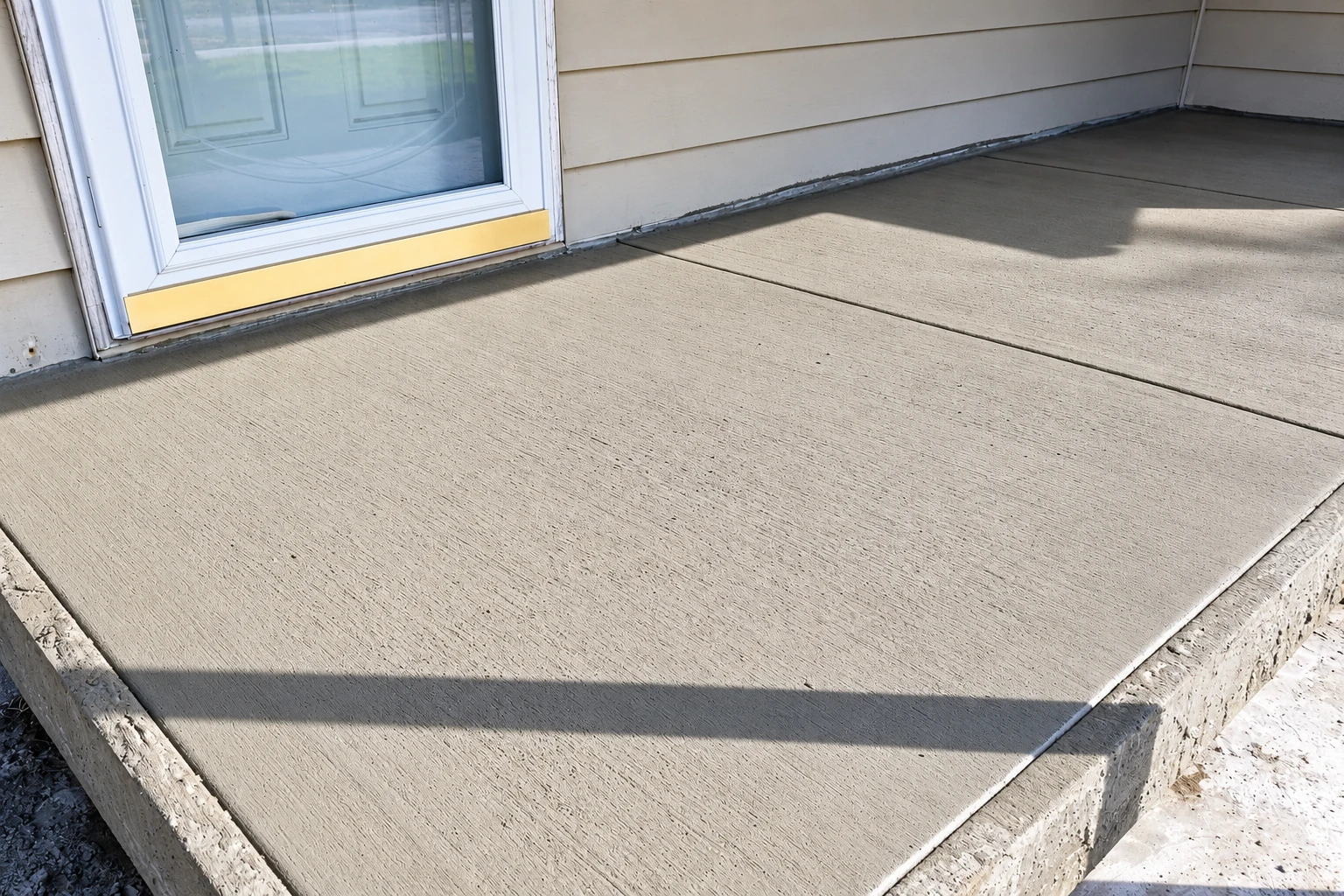
Concrete sidewalk building in West Springfield MA - a walk ready for winter
Cracked, sunken or flaking walk out front? We tear it out and pour a new concrete sidewalk on a solid base, planned for winter.
I do the estimate myself
I come out, look at your walk and give you the estimate myself, so the person pricing the job is the one who answers for it. Our crew does the work, and I'm on site with them while they do it.
Running this business since 2017
I taught myself concrete, then spent years on other people's crews learning what the books leave out. We're best known for explaining the job before we start, so you know what goes under your walk and why.
Licensed, insured and one call away
We're fully licensed and insured. When you want to talk about your walk, call (413) 405-0843 or send the form, and I'll set up a time to come out and look at it with you.
Concrete sidewalk building in West Springfield
Concrete sidewalk building means replacing a cracked, sunken or flaking walk, or putting in a new one, with concrete that's mixed, placed and cared for to stand up to freezing and salt. We do it in West Springfield, MA and the cities around it, from Holyoke to Suffield, CT.
Most calls start with a walk that's cracked, sunk at a joint, tipped toward the house or flaking. The price moves with the walk's length and width, tearing out and hauling off the old concrete, how much the ground needs fixing, and whether it ties into steps, a driveway or the road. The schedule turns mostly on pour-day weather and on any permit. My written estimate lays out the scope so you know what you're paying for.
Permits are the next question. The Town of West Springfield's permit list covers road occupancy, utility work, markouts and trenching, and it doesn't name sidewalk building, so the list alone doesn't settle whether your walk needs one. Before work starts, we check with the Building Commissioner's office at 413-263-3059, and when a job needs a permit we handle the application for you. Permit email for West Springfield goes to dpwpermits@tows.org if you'd like to ask yourself.
Sidewalks, the ground under them and the first winter
Digging out the base first
The base is where I'd spend your money first, because it's what keeps a walk flat. We break out the old walk, dig past the loose dirt and pack the subgrade, the ground the slab sits on, instead of just raking it level. We check where water runs so the walk sheds it away from the house, and if it meets the garage we can plan it with garage floor concrete too. The base is hidden on day one and it's the first thing people want to trim, but a nice finish on soft ground is like new paint on a rotten board.
Joints, finish and pour timing
Concrete cracks as it shrinks, so we cut control joints, shallow grooves that give it a place to crack in a straight line instead of wandering across the walk. We cut them while the concrete is young, not days later. The top gets a broom finish, light ridges that give your shoes grip when it's wet. We plan the pour around the heat of the day, because concrete placed in midday sun can end up with a weak, dusty top. If you'd like color or a pattern instead, that's our decorative concrete work.
Talking through the first winter
A new walk needs the most care in its first winter, so I bring it up before we pour. I give you a short list of what to put down for traction and what to keep off the walk, and we go over it together so the first icy morning isn't a guess. Sealing comes later. One concrete supplier's guide says sealing helps a slab keep its looks and durability once it has dried out, and that it's time to reseal when water stops beading on the surface.
Get a written estimate for your sidewalk
Send the walk's rough length and width and whether it meets the road, and we'll get back to you within one business day. Then I'll come out for a free look, with no obligation, and put the scope in writing.
(413) 405-0843How a sidewalk job goes with us
I walk the site with you
After you call, I come out and walk the site with you, talking through what I see, like where the water runs and what's under the old concrete. That's usually where a walk's problems started.
A written estimate first
You get a written estimate with the scope of your job, from tear-out to finish, so the base work isn't a mystery. I answer your questions before you decide anything, since concrete is hard to change once it's poured.
Prep, pour and a care talk
Our crew does the prep the way we planned it, then we pour and finish the walk. Before we leave, I show you how to look after the new concrete, including the winter list we went over.
Concrete sidewalk questions in West Springfield
How much does a concrete sidewalk cost in West Springfield?
A concrete sidewalk usually costs about $9 to $16 per square foot across the US, based on public bid prices. That's a national figure, not our price, and tear-out, groundwork and tying into steps or the road can push your walk either way. Your own number comes in the written estimate after I see the walk.
How should I treat a new concrete walk its first winter?
Keep deicing chemicals off it, which is what one concrete supplier's guide advises, especially in that first winter. After the first year, the guide says to use deicers sparingly, since they make freezing and thawing more frequent and severe, and to skip any with ammonium sulfate or ammonium nitrate, which break concrete down fast.
What helps a concrete sidewalk hold up to freezing and salt?
A mix with entrained air, tiny bubbles in the concrete, can give it room to relieve pressure as it freezes, so ask whether your mix has it. A sidewalk study also found the mix, the temperature at placement, curing, the wait while it hardens, and de-icing each affect how well a walk resists scaling, the flaking of its top layer.
How do I check a contractor's registration in Massachusetts?
Look them up on the state's online Contractor Hub, which shows a contractor's registration and history. Massachusetts requires contractors working on an existing, owner-occupied home of one to four units to be registered as a Home Improvement Contractor. For work estimated at $1,000 or more, state rules also require a written contract.