
Holyoke is a short drive up the river from our base in West Springfield, and the work there runs from homes to commercial property. Near downtown we see older multi-family houses with narrow driveways, worn front steps and walks that have heaved over the years. Up the hills it's more single-family homes with longer, steeper driveways and backyard patios. Builders and property owners call us for footings, floors and lots, the same kind of work we do in Chicopee and Westfield.
On older property, the concrete we tear out was often poured on whatever dirt was there, and on a sloped lot the water runs straight at the house. So most Holyoke jobs start below the surface, with the ground and the drainage, before we ever talk about the finish.
What moves the price and the schedule
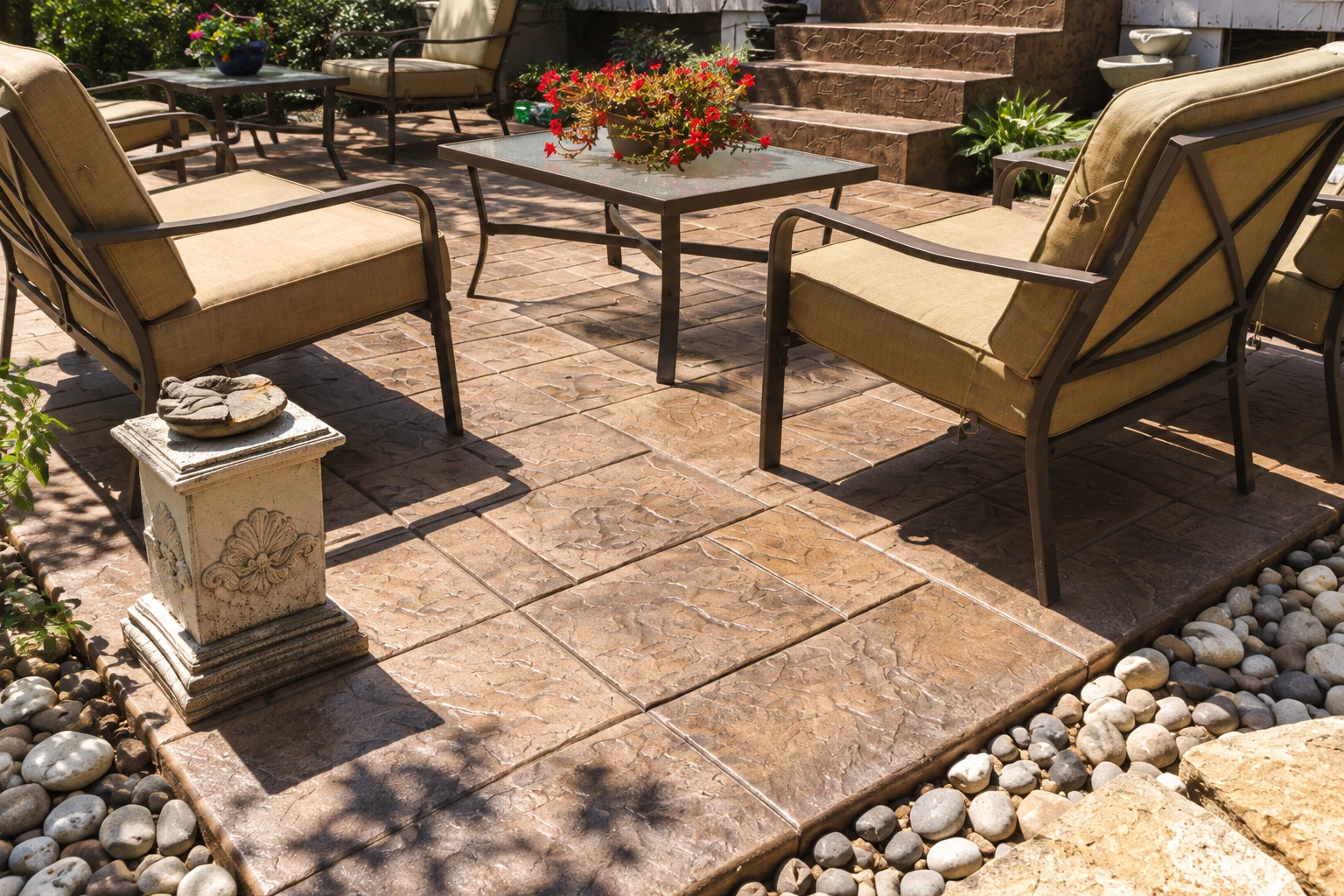
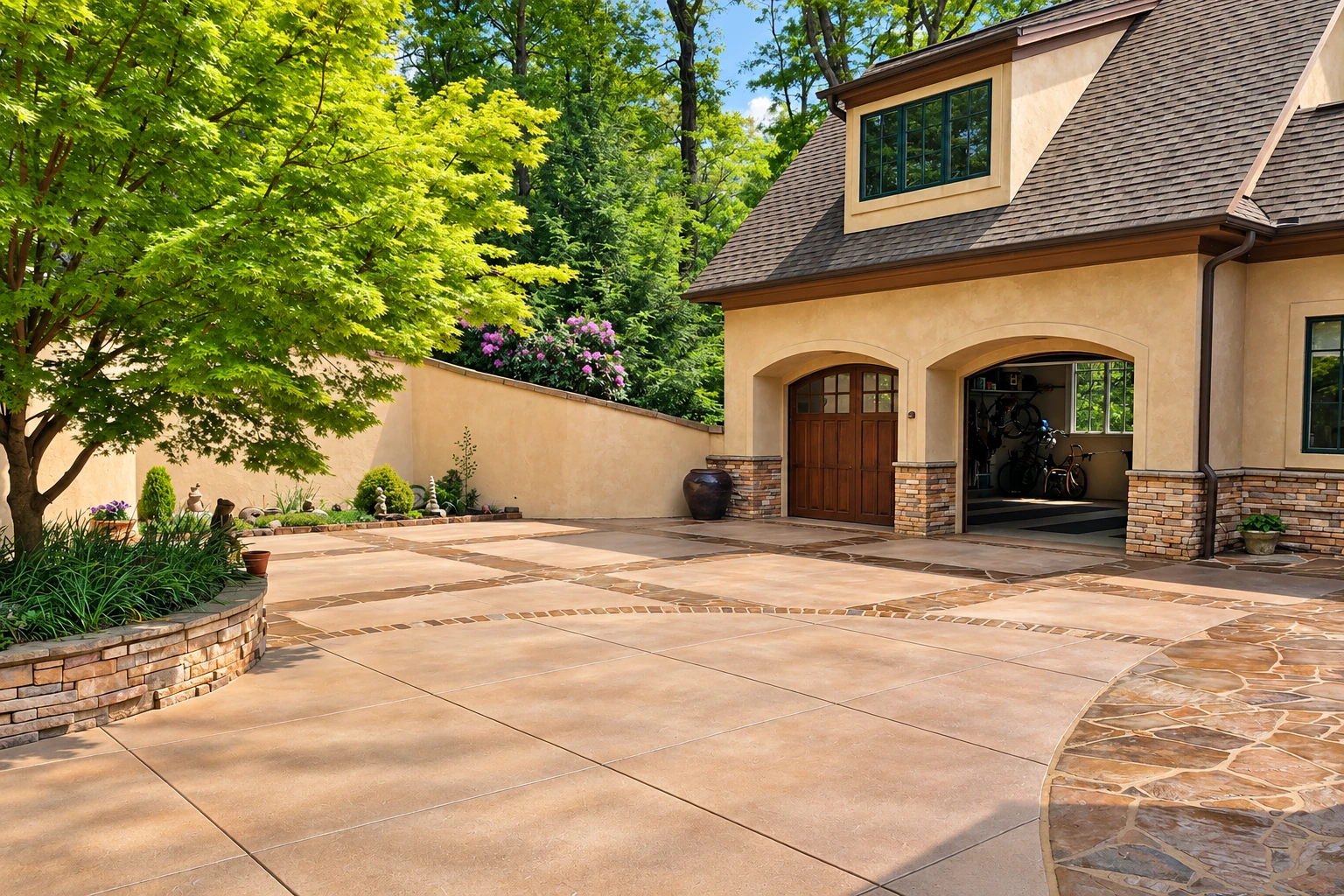
The price mostly follows the size of the slab, how much old concrete we break out and haul away, and how deep we dig before we hit firm ground. Rebar, the steel grid inside a slab that holds it together if it cracks, adds cost too, and a driveway that carries a truck needs more of it than a walk does. A plain broom finish, the light texture that keeps feet and tires from slipping, costs less than the color and pattern of decorative concrete. The schedule turns on the permit check, the weather and curing, the days a slab needs to harden before you use it. I put the scope in writing when I walk your site, so you can see each piece.
Why the base gets the budget first
When a budget gets tight, people usually want to cut the base, because nobody sees it once the concrete is down. I'd rather cut the fancy finish. The subgrade, the ground the slab sits on, has to be dug out and packed hard, because a slab on raked dirt settles as the dirt does, and that's the sinking and cracking you see on a lot of older driveways. We also check where the water runs before we set forms, so the slab falls away from your house instead of toward it. Think of it like a house on a bad foundation. A plain slab on a good base will serve you better than a pretty one on a bad base.
Getting the truck in on a tight lot
A lot of Holyoke houses sit close together, with a driveway squeezed between buildings or climbing a steep street, so access is the first thing I look at. If the concrete truck can't back up to the forms, we bring the concrete in by wheelbarrow or pump, and that takes more time and more hands. Before pour day, we'll ask you to move the cars, clear a path along the side of the house and give the neighbors a heads-up about the truck out front. We also pour in the cooler part of the day when we can, because concrete that sets too fast in midday heat can end up with a weak, dusty top.