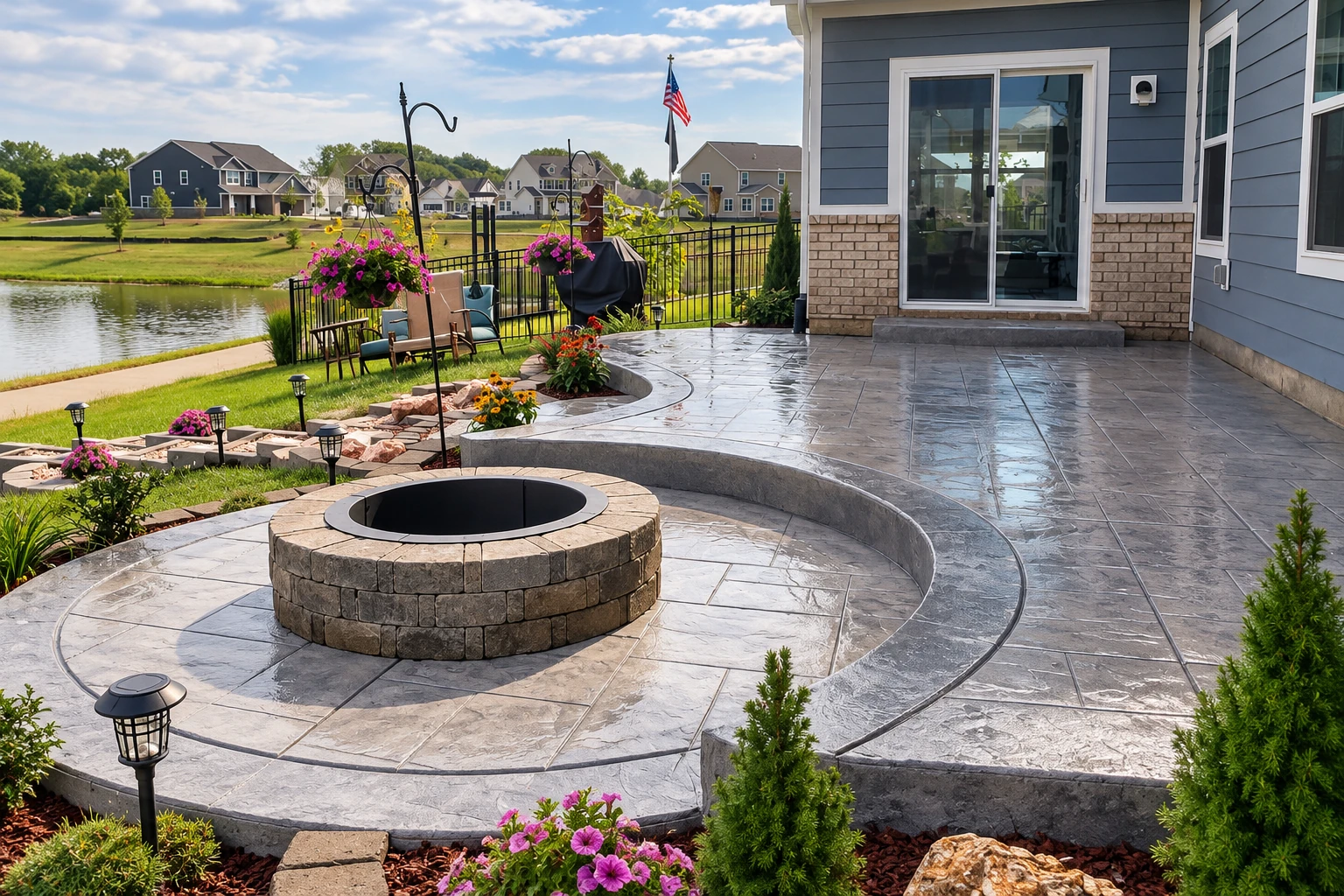
Most of our calls from Chicopee are for the concrete around a house: the driveway, the front walk, the back steps, a patio out back. A lot of the homes are older one- and two-family houses, and the concrete beside them has often been patched, has settled or has cracked into pieces over the years. Driveways tend to run tight between houses, so getting a truck and a crew in without crossing a neighbor's yard is part of the plan from my first visit. We're a concrete contractor based in West Springfield, MA, and we do the same work in Springfield and over in Agawam, so what we see here isn't new to us.
Old concrete usually fails from underneath. Until we break the old slab out, we don't know whether it was poured on packed stone or on raked dirt, so that's the first thing I look for and the first thing I'll explain to you.
What moves the price and the schedule
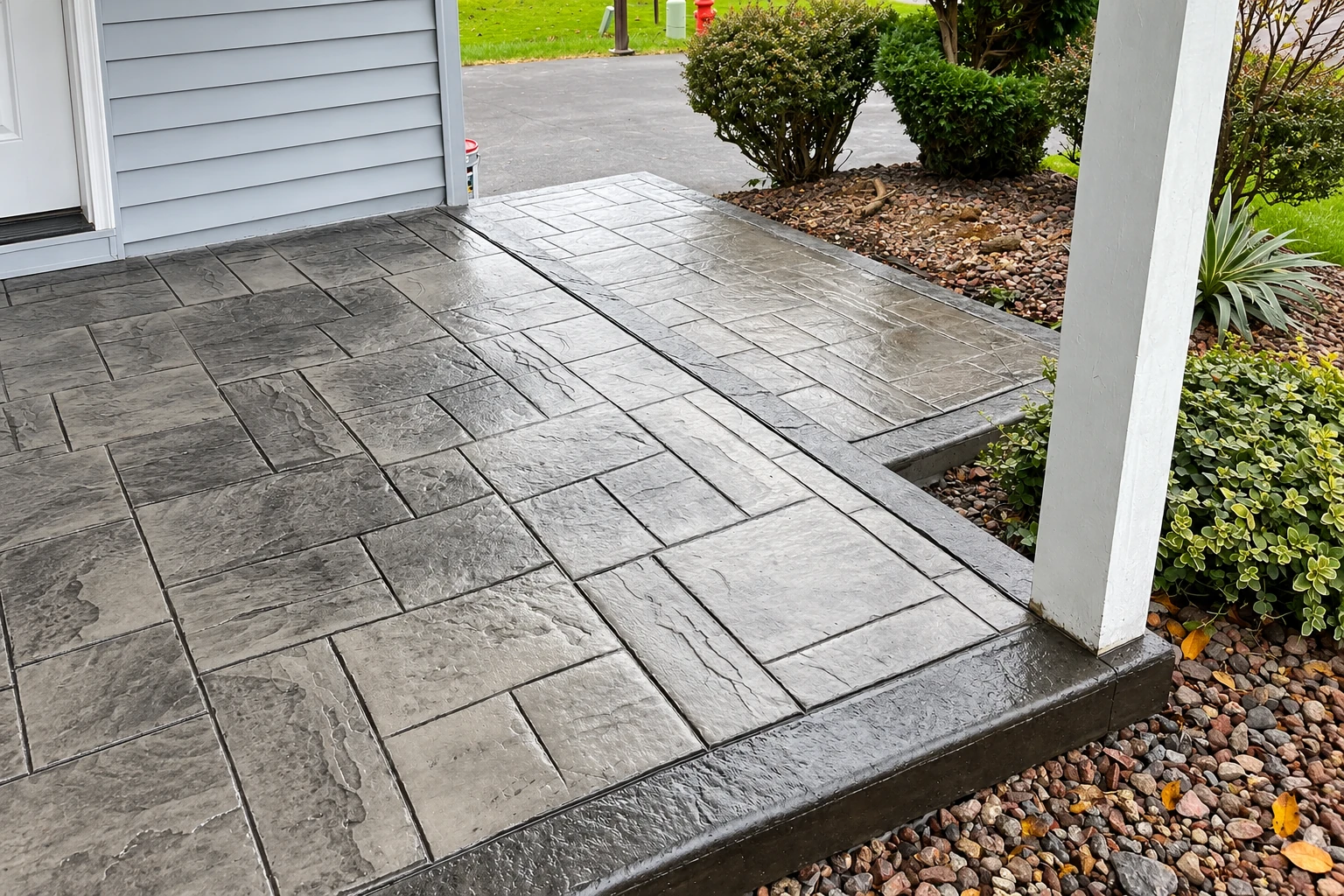
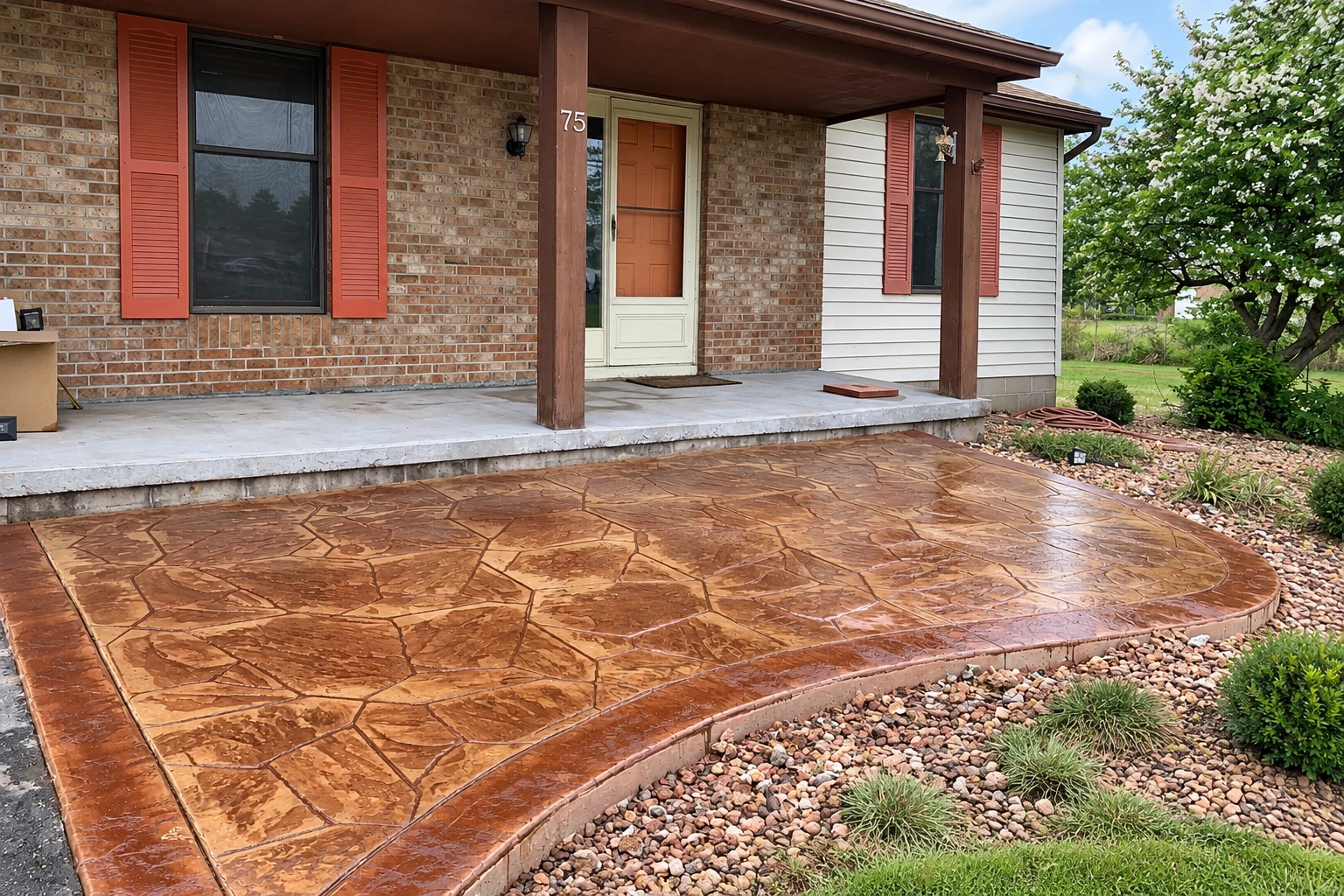
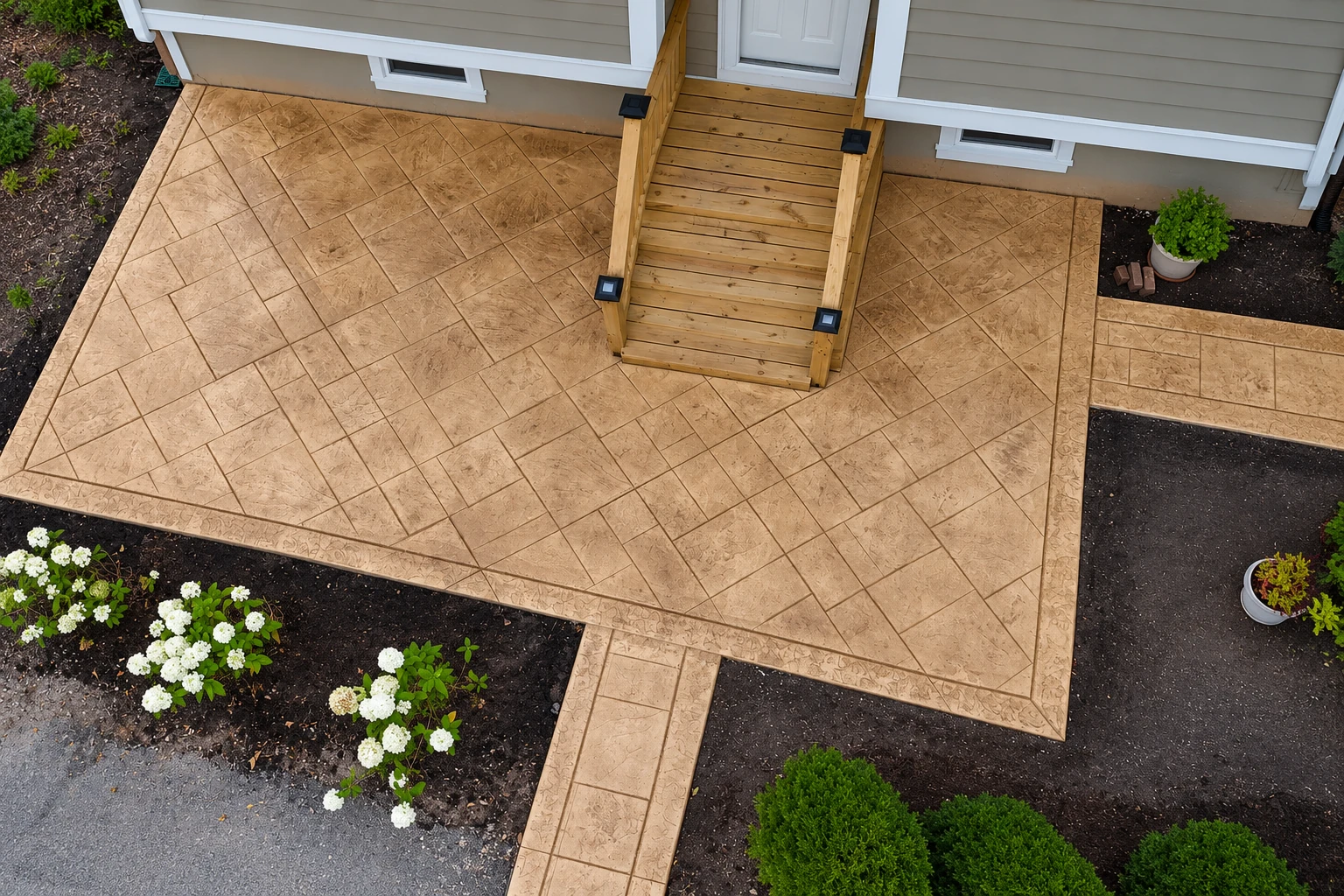
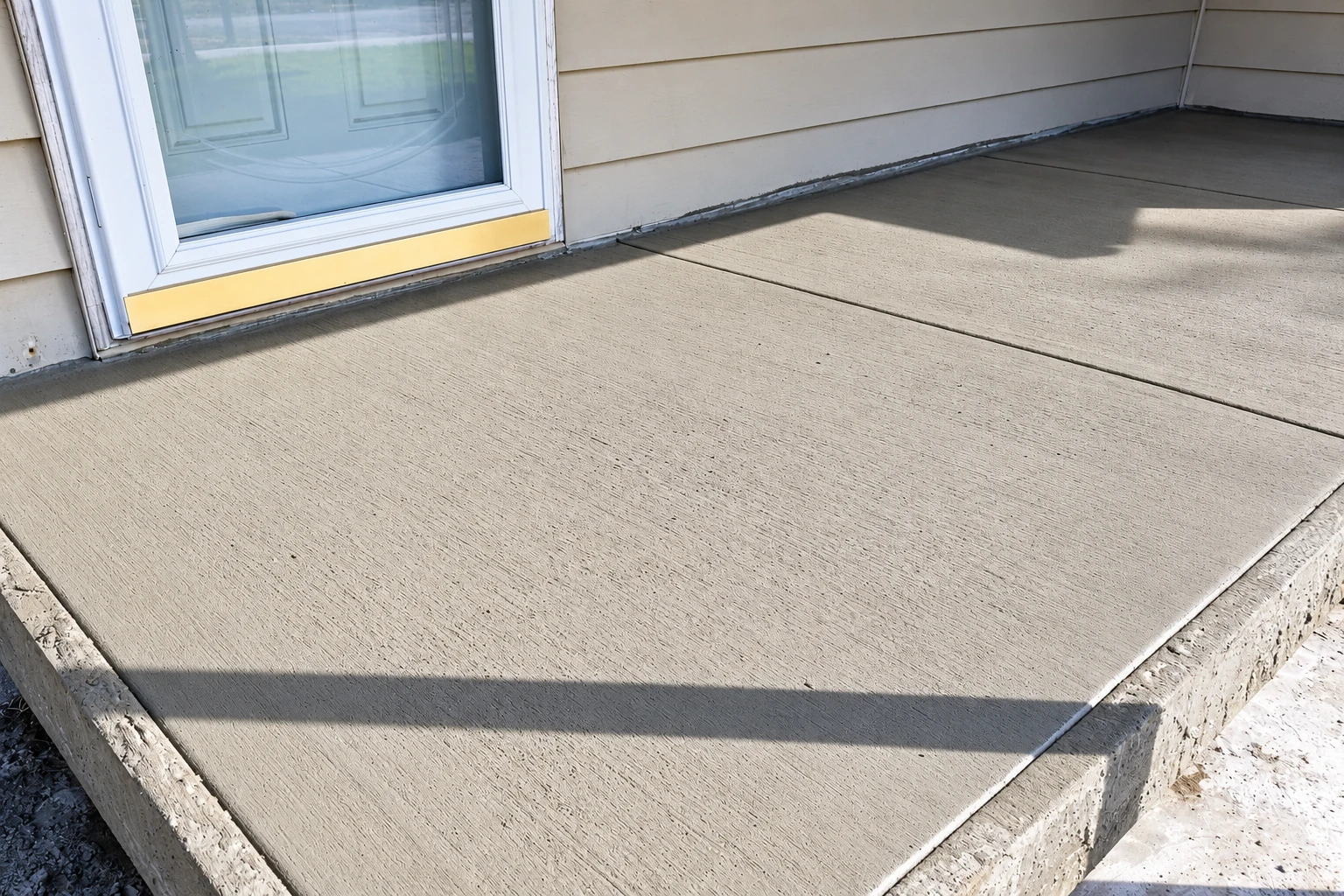
The price mostly comes down to the size of the slab, how much old concrete we break out and haul away, how deep we dig to reach firm ground and the finish you choose. A broom finish, the light brushed texture that keeps a slab from getting slick, costs less than stamped concrete. The schedule turns on the tear-out, the base work and curing, the wait while the concrete hardens enough to take weight, and on whether the city wants a permit. We check with your city's building office first and file the permit when one's needed. I walk the site with you and put the scope in writing.
Why I put the money into the base
The base is the packed layer of stone the slab sits on, and on day one nobody sees it. That's why it's the first thing people want to cut from a budget, and the one place I'll talk you out of saving. Ground that's only raked level settles with the dirt, and the slab cracks along with it. We dig out, pack the base, slope the slab so water runs away from your house and cut control joints, shallow grooves that give the concrete a place to crack, before it cracks on its own. Concrete still cracks, but on a good base it usually cracks where we chose, in the joints.
Getting a tight lot ready for pour day
Pour day goes smoother when the cars are out of the driveway and there's a clear path for the truck. On a tight lot between two houses, I'll look at where the truck can sit and whether the edge you share with a neighbor needs a conversation first. If you own a two-family, tell your tenants the dates so nobody's car gets stuck behind fresh concrete. We pour early in the day when we can, because concrete that dries too fast in midday heat ends up with a weak, dusty top. Afterward, keep cars and dogs off it until we say it's ready.