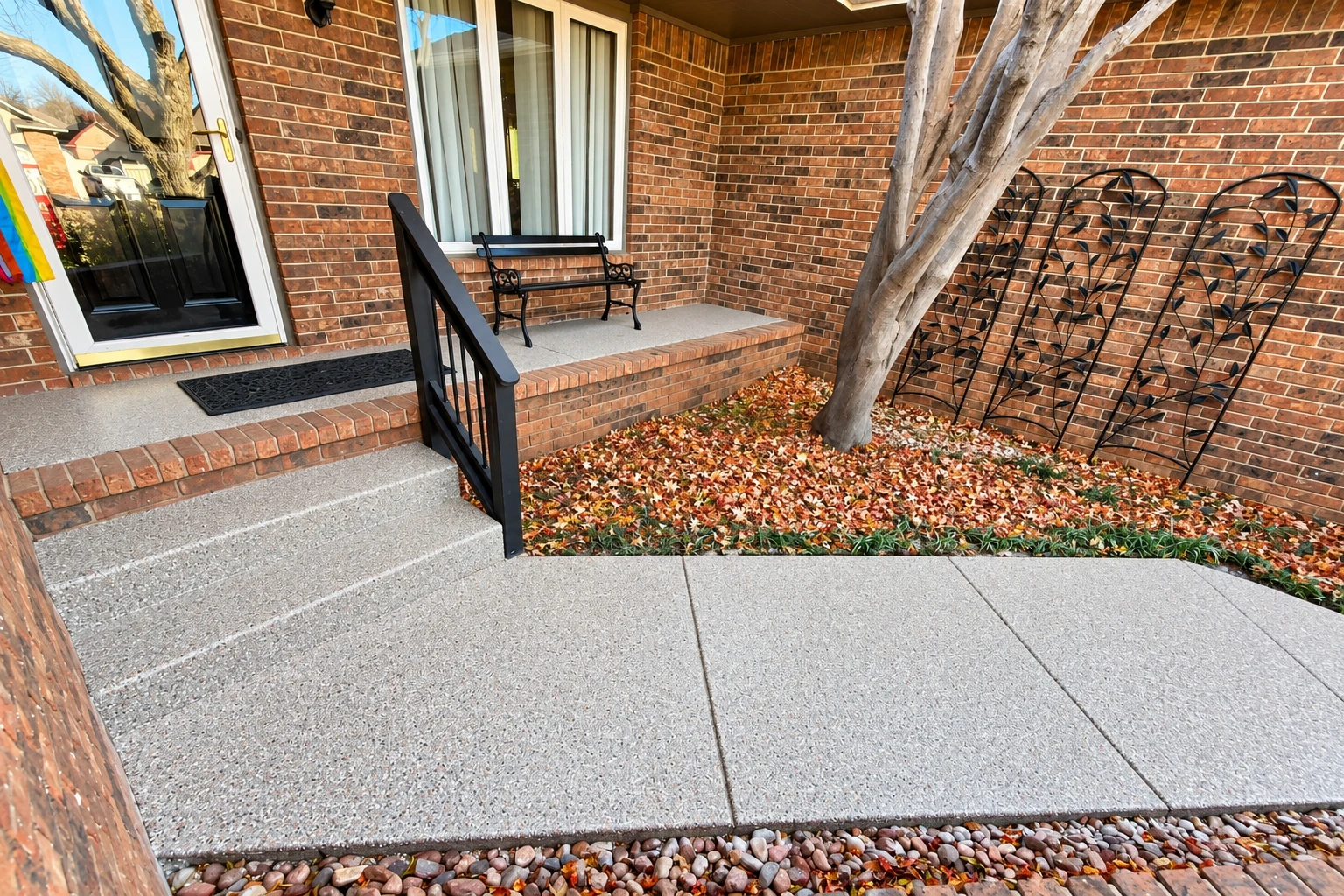
Concrete patio construction in West Springfield MA - a slab on solid, well-drained ground
Old patio cracked, sinking or holding puddles by the back door? We build a new one on packed ground, sloped so water runs away.
I give your estimate myself
The person who looks at your yard and writes the price should be the one who answers for it. I come out for every estimate, and when the work starts, our crew builds the patio with me on site.
In business since 2017
I taught myself concrete, then spent years on other people's crews learning what the books leave out. So before anything gets poured, I explain what goes under your patio and why we build it that way.
Fully licensed and insured
That's the first thing to ask any contractor before they set foot in your yard, and we're glad to answer it. When you're ready, call (413) 405-0843 or fill out our estimate form.
Building a patio in West Springfield
Concrete patio construction in West Springfield starts below the surface. A patio is a slab poured right on the ground, and it holds up best when the ground under it is evenly firm. We build them for homeowners replacing a cracked or sinking patio or adding a new one.
What moves the price is mostly what's under and around the patio. Size is part of it, but so is breaking out an old slab, how much soft ground has to come out, and how far we carry material to reach your backyard. The finish counts too, since a plain broom finish, a light brushed texture for grip, costs less than a decorative one. Your written estimate lays out the scope so you can see what you're paying for.
The schedule turns on the weather and on what we find once we dig. Cold snaps can push a pour back, and in summer we work around midday heat, because concrete that dries too fast can end up with a weak, dusty top. After the pour comes curing, the stretch while the slab hardens before you use it. Before work starts, we check with your city, and when a job needs a permit we handle the application for you.
Patio construction, from the base to the yard around it
Digging out soft ground first
A patio is only as good as the ground under it. We dig out the soft spots in the subgrade, the soil the slab sits on, and compact a base under the whole patio before any concrete shows up. It's the part you'll never see, and it's the first thing people want to cut when the budget's tight. I'd rather you spend less on the finish than less on the base, because a fancy surface on loose dirt still sinks.
Sloping the patio with the yard
Water is what wears a patio out in a freezing climate, because concrete that stays soaked takes the worst of every freeze. We set the patio's slope together with the yard around it so rain runs away from the house and doesn't sit against the slab. We also look at where the downspouts empty and where you'll pile snow, since both dump water in one spot. If a walk joins the patio to the driveway, we grade it at the same time, and our concrete sidewalk building gets the same base work.
A mix and finish for freezing weather
Ask about air-entrained concrete, a mix with tiny air bubbles spread through it that give freezing water room to push. National concrete guidance calls it a key durability step where the slab's exposure calls for it, and a patio that gets wet and freezes is that kind of slab. The same guidance says overworking the surface can knock out those bubbles near the top, so a slick, hard-troweled finish belongs outside only when the job specifically calls for it. Most patios get a broom finish. For a pattern or color, look at stamped concrete.
Get a written estimate for your new patio
We'll reply within one business day, and I'll come out for a free on-site estimate with no obligation. Note your address and any stream, pond or wetland near the planned patio.
(413) 405-0843How a patio job goes with us
A site walk and written estimate
After you call, I come out and walk the yard with you, looking at where the water runs and what's under the old concrete if there is any. You get a written estimate, and I answer your questions before you decide.
Prep and pour as planned
Our crew does the prep the way we planned it with you, digging out, packing the base and setting the forms to the slope we agreed on. Then we pour, finish the surface and cut the joints.
Care tips before we leave
Before we leave, I show you how to look after the new concrete, from how long to stay off it to how to treat it when it gets icy. Satisfaction guaranteed on every job.
Concrete patio questions in West Springfield
Why do concrete patios settle or crack?
Concrete patios usually settle or crack because the ground under them isn't evenly firm. Soft pockets, utility trenches that were never packed, buried roots or topsoil, and soil that pumps when wet can let part of a slab drop, even when most of the yard feels solid. Control joints, shallow cuts in the slab, give any cracking a planned place to happen.
Does my West Springfield patio need Conservation Commission review?
It may, if the patio will sit near water. The Town of West Springfield's Conservation Commission reviews projects in wetlands, within 100 feet of wetlands along a creek, river, stream, pond or lake, in flood-prone areas, and within 200 feet of a year-round stream's average high water line. The Commission Officer can tell you whether your project falls under it, whatever its size.
How do I take care of a new concrete patio in winter?
Go easy on it the first winter, especially if it was poured late in the year. Ohio Concrete, writing for its own region, says late-season concrete may not dry out before freezing weather, so it advises no deicing chemicals that first winter and sand or kitty litter for grip. It also advises cleaning and resealing with a penetrating sealer, following the maker's instructions.
Does a patio contractor in Massachusetts need to be registered?
Yes, if the patio is at an existing home with one to four units that the owner lives in. Contractors who bid on or do that work register through the state's Home Improvement Contractor program, which also handles complaints, runs arbitration for disputes and can pay eligible homeowners up to $25,000 from its Guaranty Fund for unpaid judgments against contractors.