
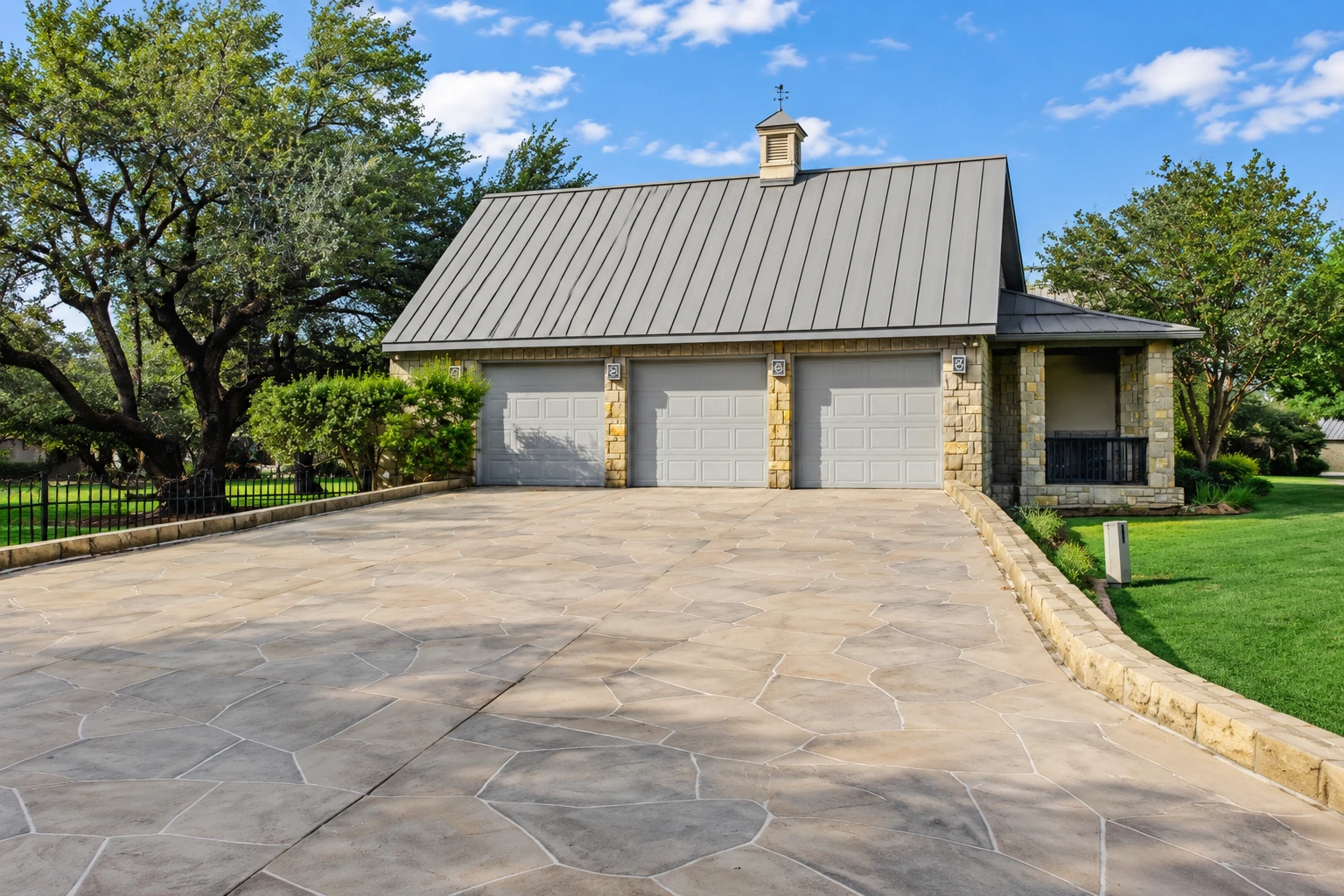
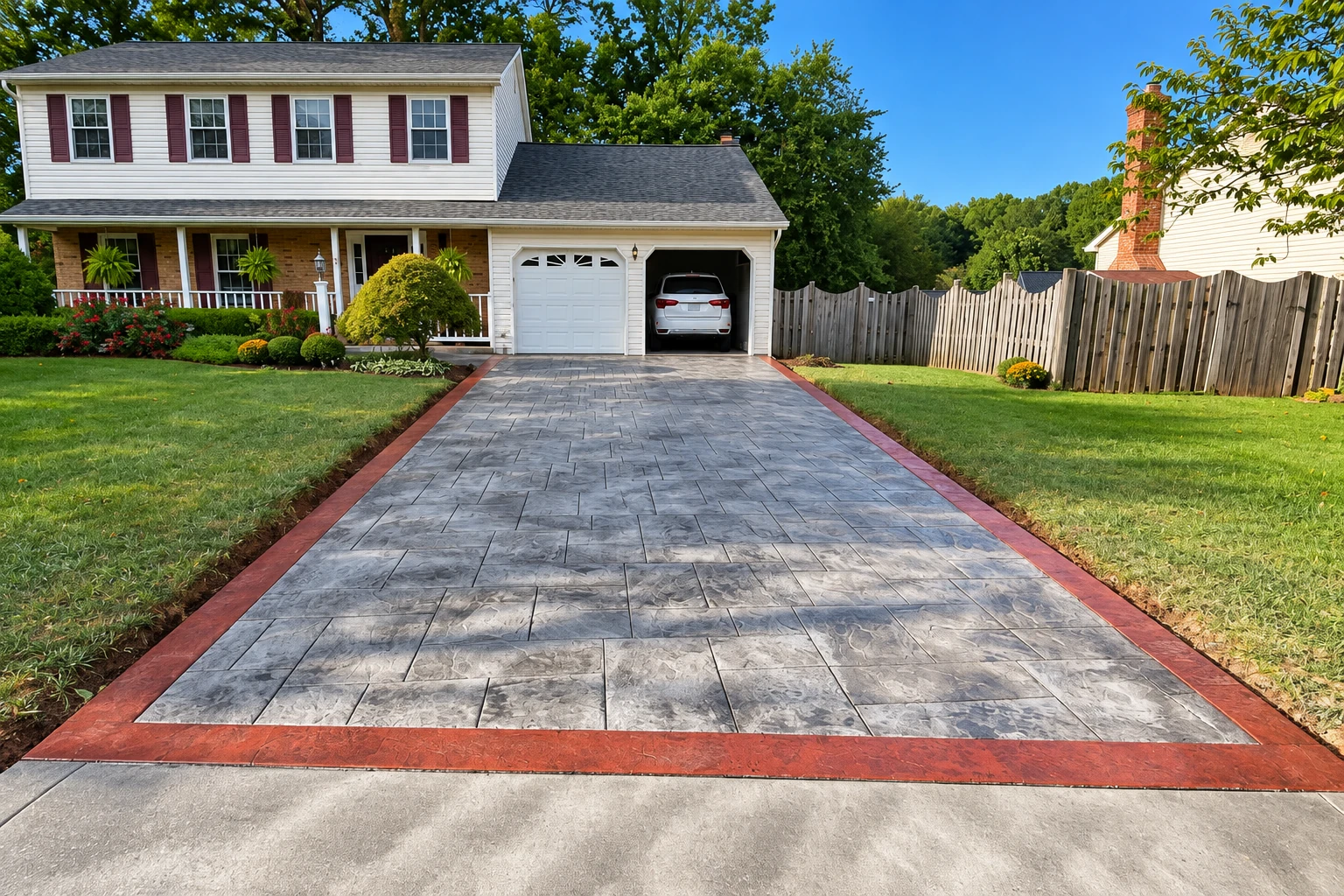
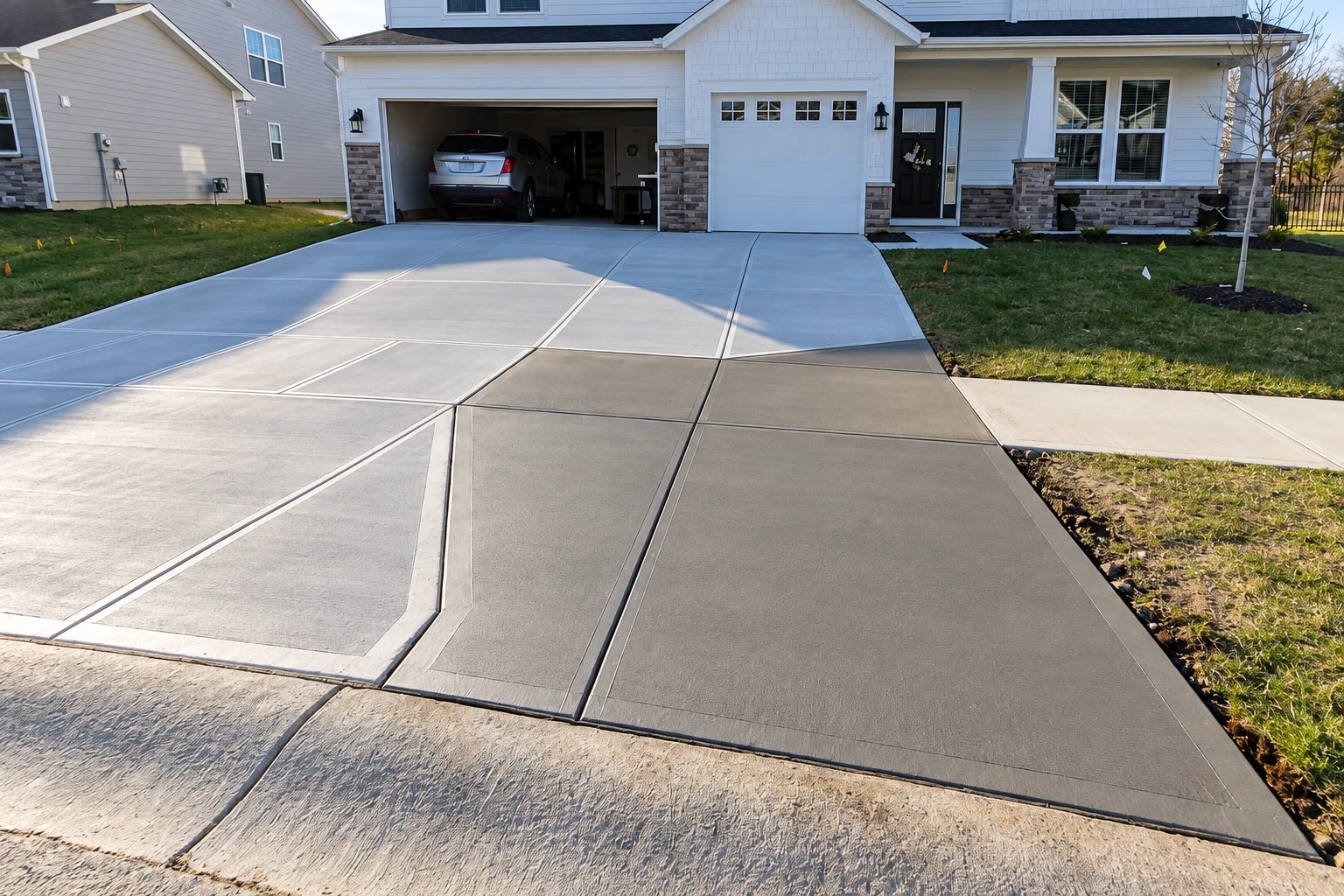
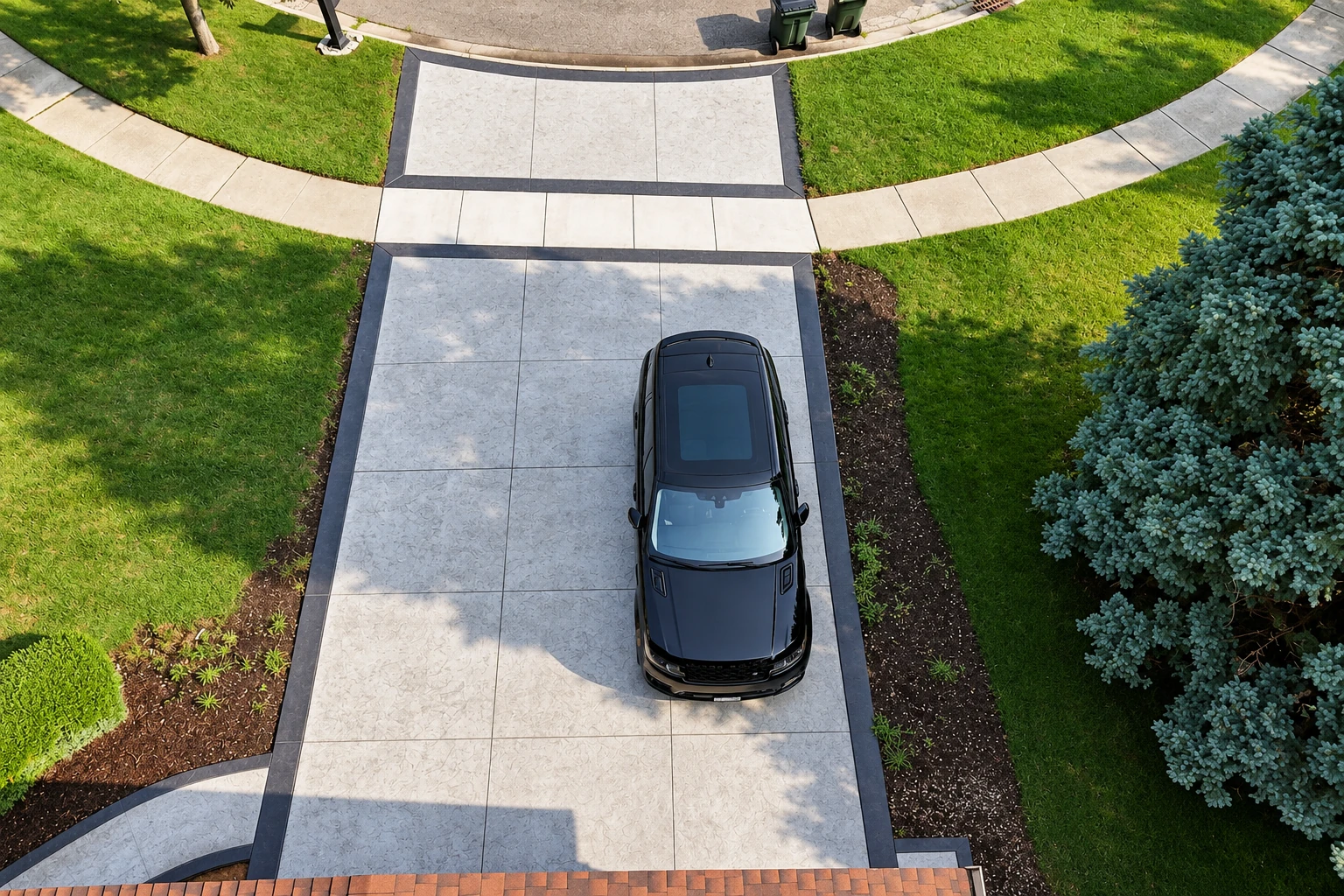
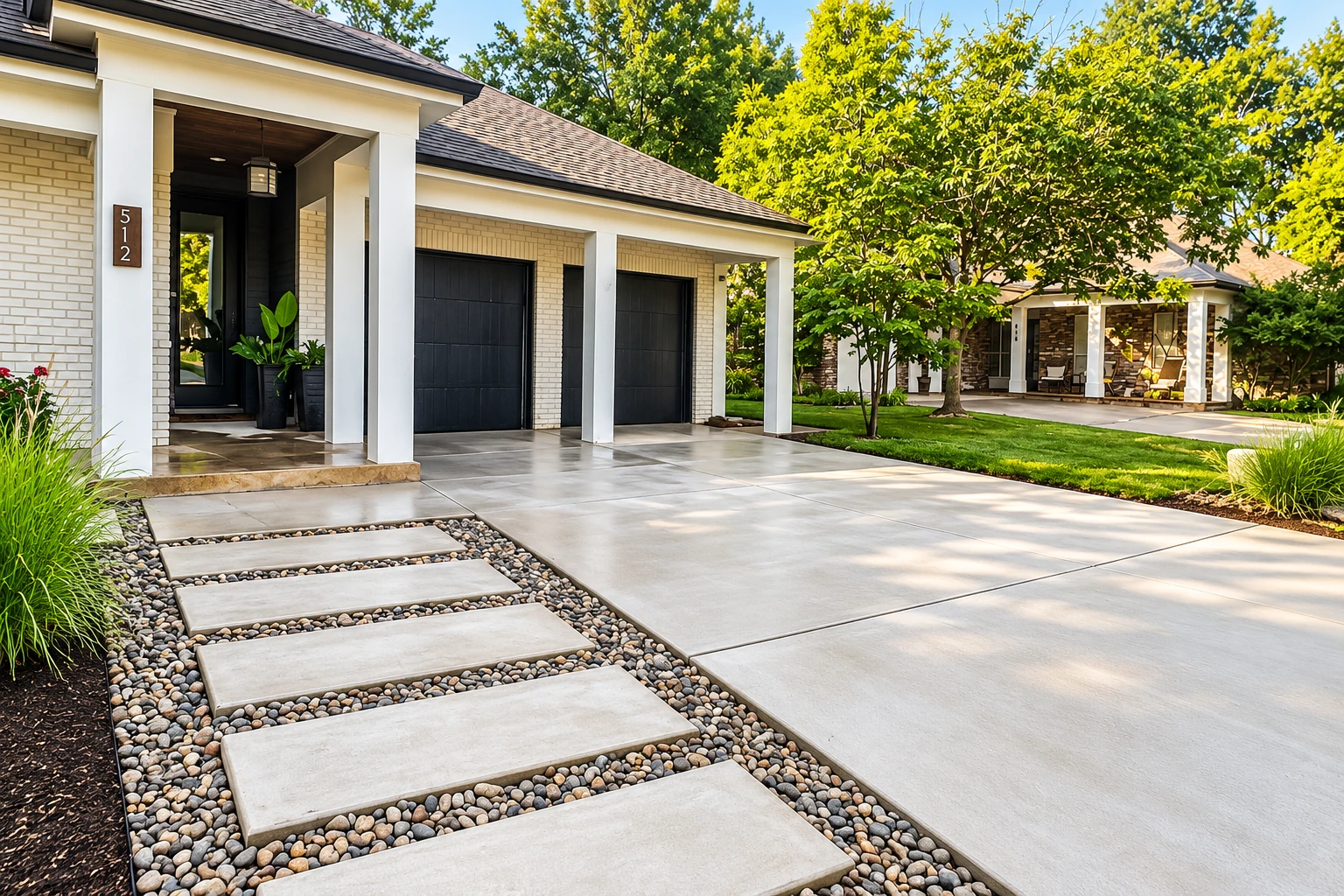
Homeowners in West Springfield mostly call us for flatwork, the driveways, patios, walks and steps that lie flat on the ground, and builders and property owners call for footings, foundations, floors and lots. We've been in business since 2017, and our crew does the same work in Springfield, Agawam and Holyoke.
A lot of the calls here are about an old slab at an older house, like a driveway that's cracked and sunk along the edges or a patio where water pools against the foundation. So the job usually starts with breaking out the old concrete and hauling it away, and what we find under it decides how much digging and packing comes next. I'd rather show you that dirt than guess about it.
What moves the price and the schedule
On a concrete driveway or patio, the price moves with the size and thickness of the slab, how much old concrete we break out and haul away, and how much base has to be dug and replaced. The finish matters too, since a plain broom finish, the light texture that gives shoes and tires grip, costs less than stamped or colored work. The schedule depends more on the tear-out and the base work than on the pour. After that comes curing, the wait while the concrete gains strength before you can use it. Your estimate puts the scope in writing, so you know what you're paying for.
Why we put the money under the slab
A slab is like a tabletop, only as steady as what holds it up. The base is the part you can't see on day one, which is why it's usually the first thing people cut to save money, and it's the last thing I'd cut. We dig the subgrade, the ground the slab sits on, down to firm soil, then bring in stone and pack it in layers so it doesn't settle the way loose dirt does. We also check where your water runs and pitch the slab away from the house. If the budget's tight, I'd drop a fancy finish before I'd thin the base.
Getting your yard ready for the pour
Pour day goes best when the concrete truck can get close, so at the estimate we'll look at where it parks, what has to move and whether a fence, a shed or a garden bed is in the way. We like to pour in the morning, because concrete finished in midday heat can dry too fast on top and turn weak and dusty later. Once it's down, keep cars, kids and pets off it until it's cured, and if it's your driveway, plan on parking somewhere else for a while. We'll tell you when it's ready for feet and when it's ready for tires.