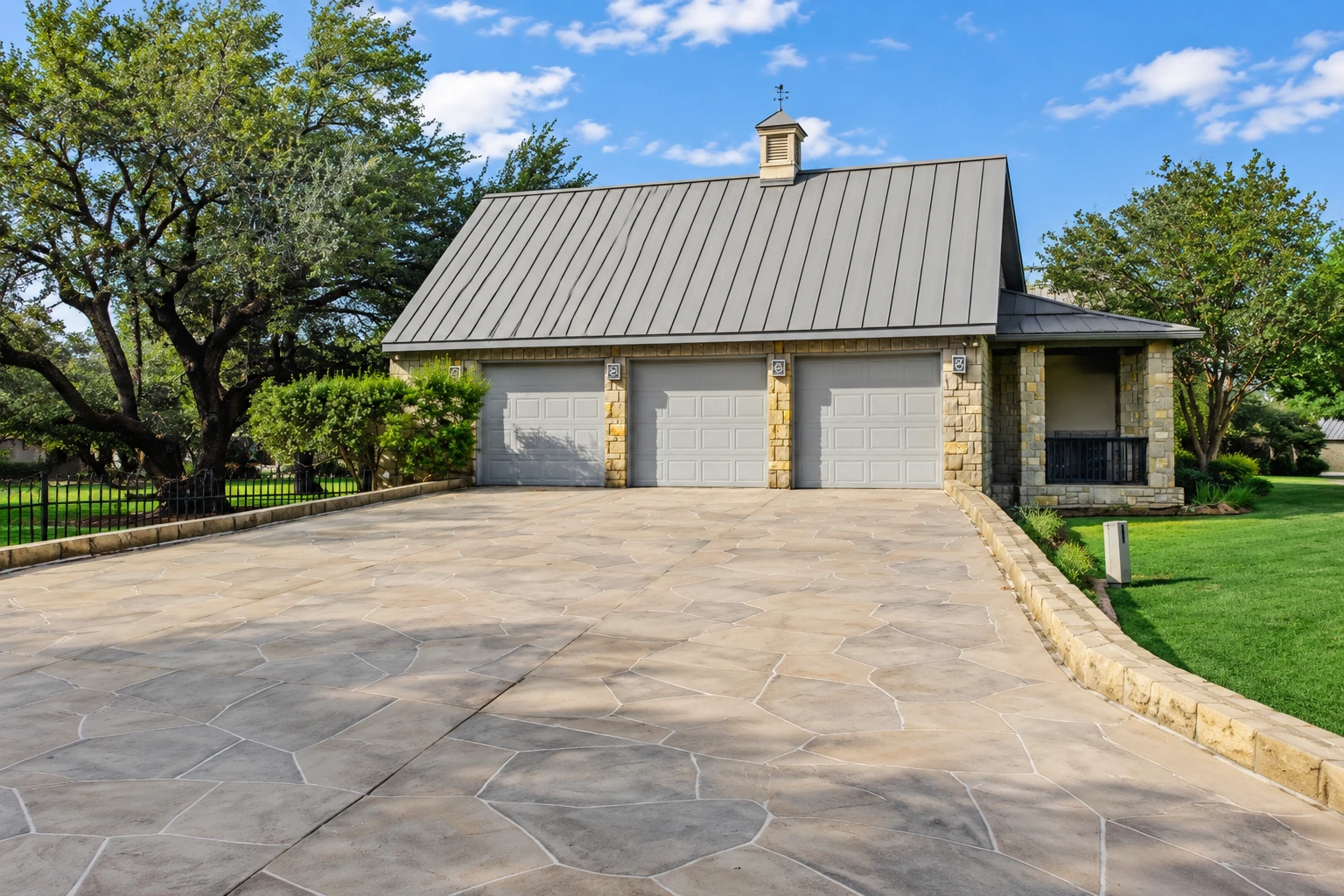
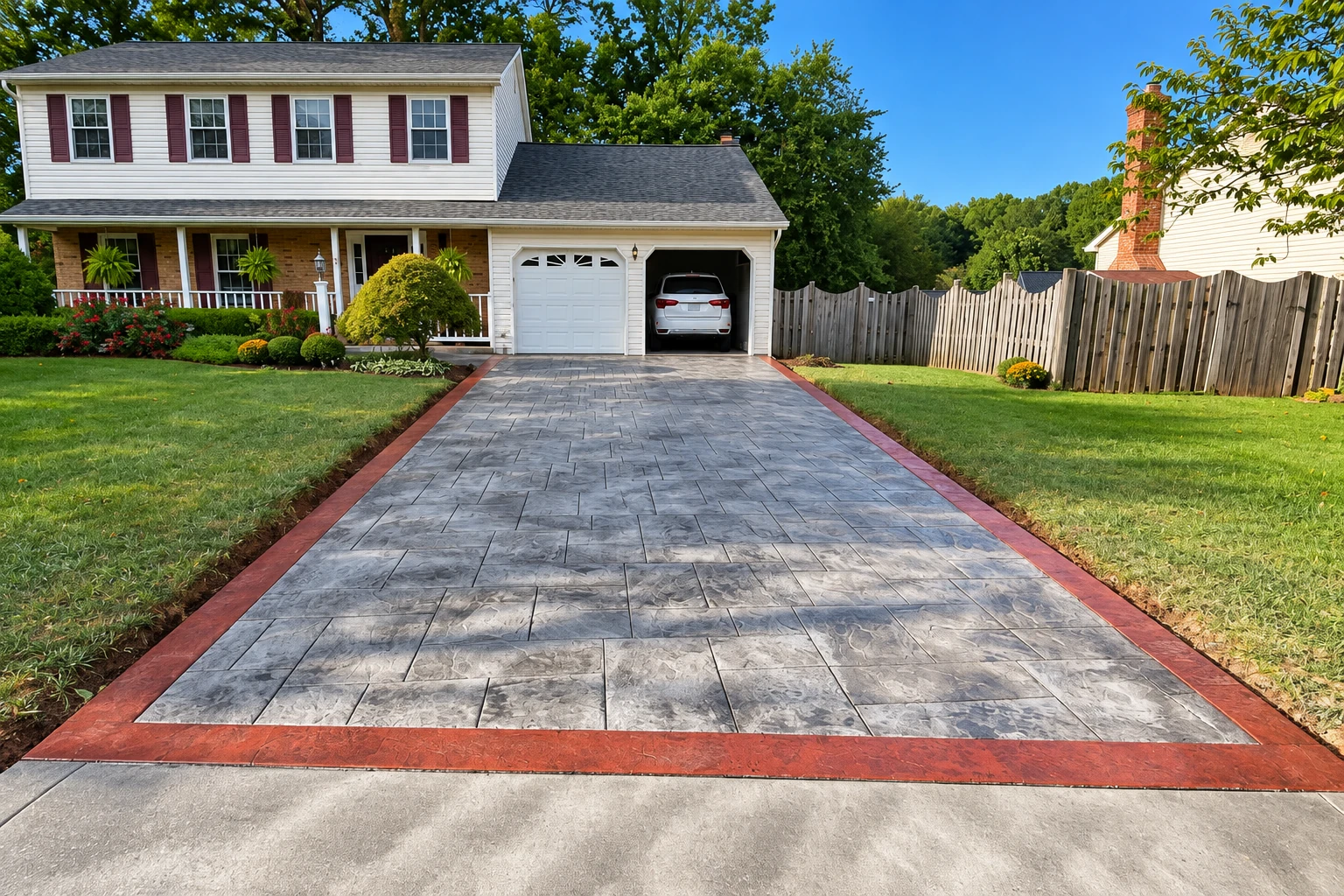
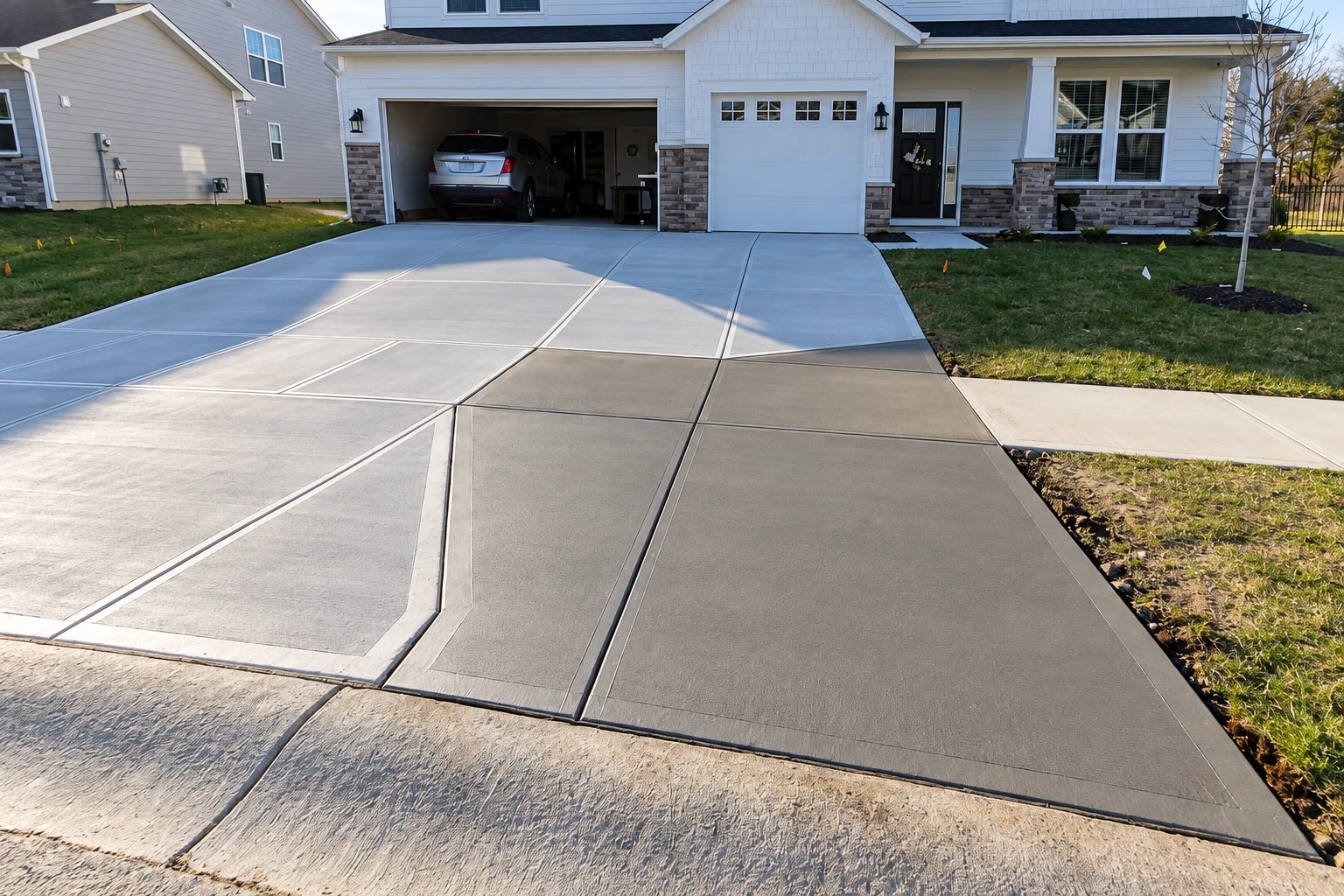
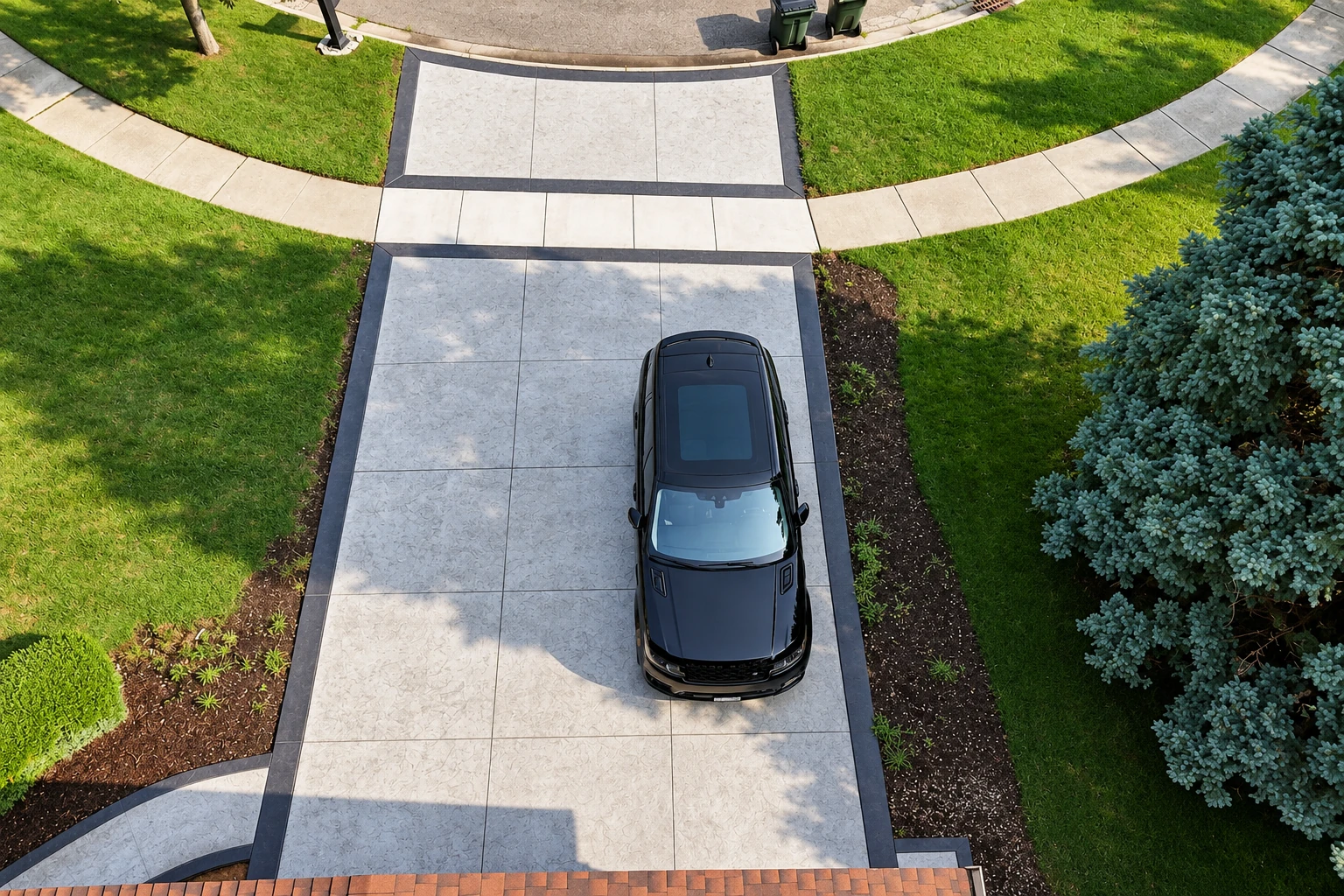
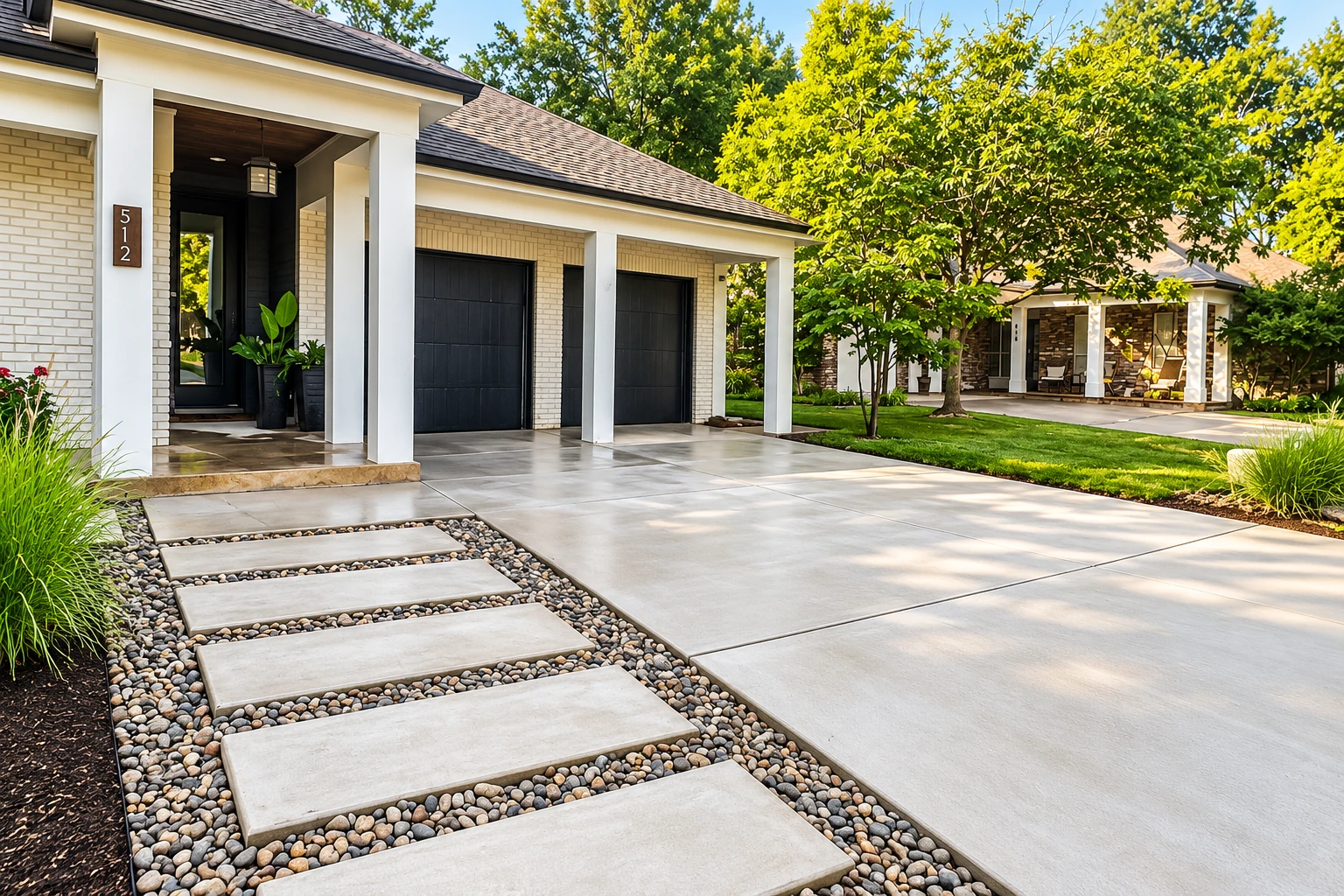
Palmer is really four villages spread over a lot of ground: Bondsville, Depot Village, Three Rivers and Thorndike, each with its own Main Street. We drive out from West Springfield for driveways, patios, walks and steps, and for footings and floors when builders call.
We do the same work next door in Ludlow, MA and west to Easthampton, MA. What we find in Palmer looks a lot like what we find there, with older driveways and walks that were poured on raked dirt and have since sunk, cracked or started holding water by the steps. That's why a job here usually starts below the surface, with whatever the old slab was sitting on.
What sets the price and the schedule
The price comes down to how big the slab is, how thick it needs to be for what sits on it, how much old concrete comes out, and how much digging and base work the ground needs. The finish matters too, since a plain broom finish, the light texture that gives your shoes grip, costs less than stamped concrete. The schedule turns on the base work, a dry day for the pour and curing, which is the wait while the concrete gains strength before you use it. You can walk on a new slab well before you can drive on it. When I walk your site, I put the scope in writing so you can see each of those pieces.
Why we spend more under the slab
The base is the last place I'd trim a budget, even though it's hidden the day we pour. A slab is only as steady as its subgrade, the ground it sits on, so we dig out and pack the base instead of raking dirt level and hoping it holds. We check where the water runs so the slab sheds it away from your house, not toward it. We also cut control joints early, before the concrete cracks on its own. Those are shallow grooves that give it a planned place to crack. Concrete does crack, so the honest goal is cracks in lines we chose, not across the middle of your driveway.
New slabs and foundations need a supervisor
Massachusetts requires a licensed construction supervisor or a registered design professional to oversee construction on one- and two-family homes and the structures that go with them, whatever their size. That license is a separate thing from the home improvement registration in the questions below, and one doesn't stand in for the other. If you're planning a garage, an addition or a new house that needs slab foundation building or footings, it's worth knowing who oversees the work before the first pour, because that decides who has to be on the job. We're fully licensed and insured.