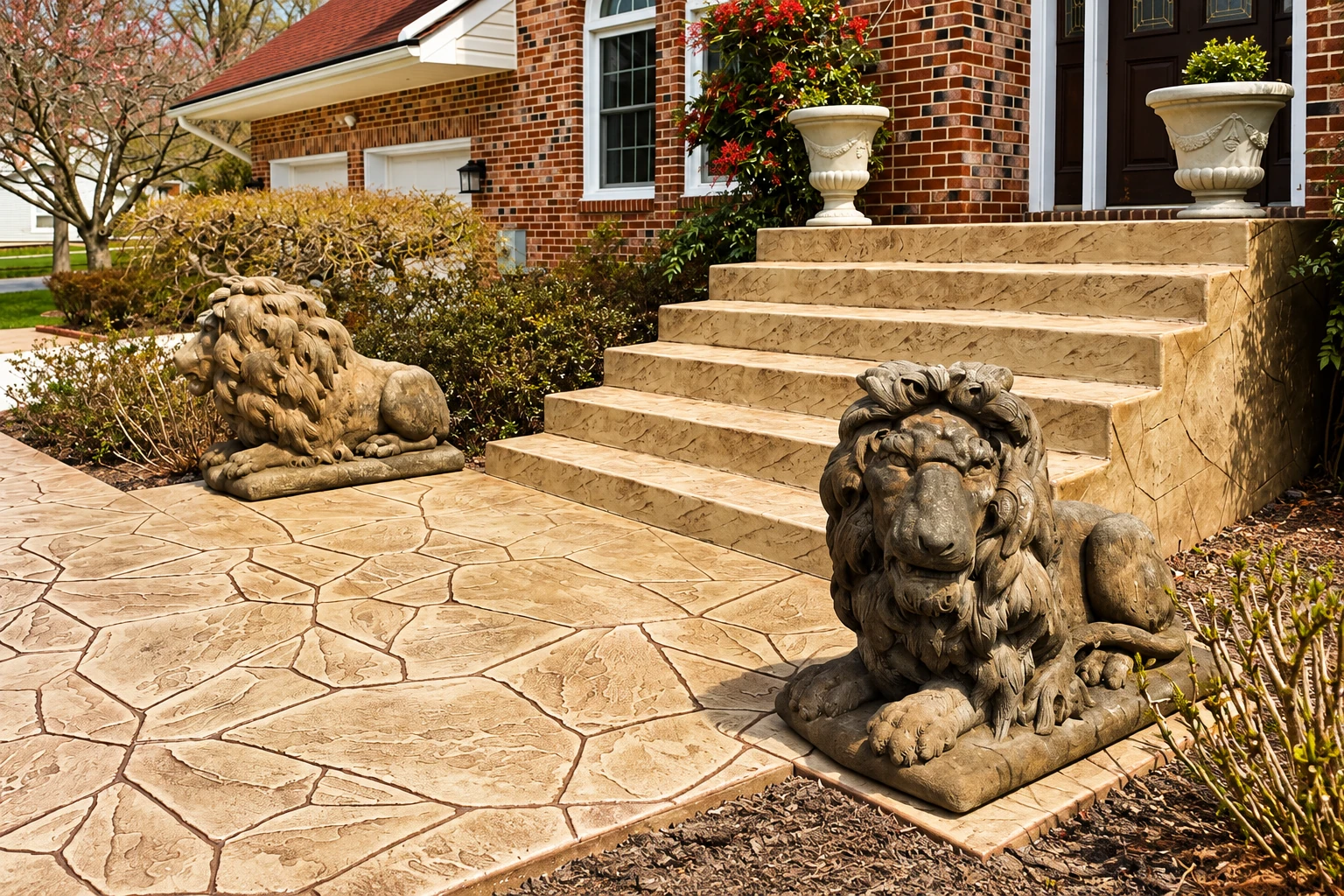
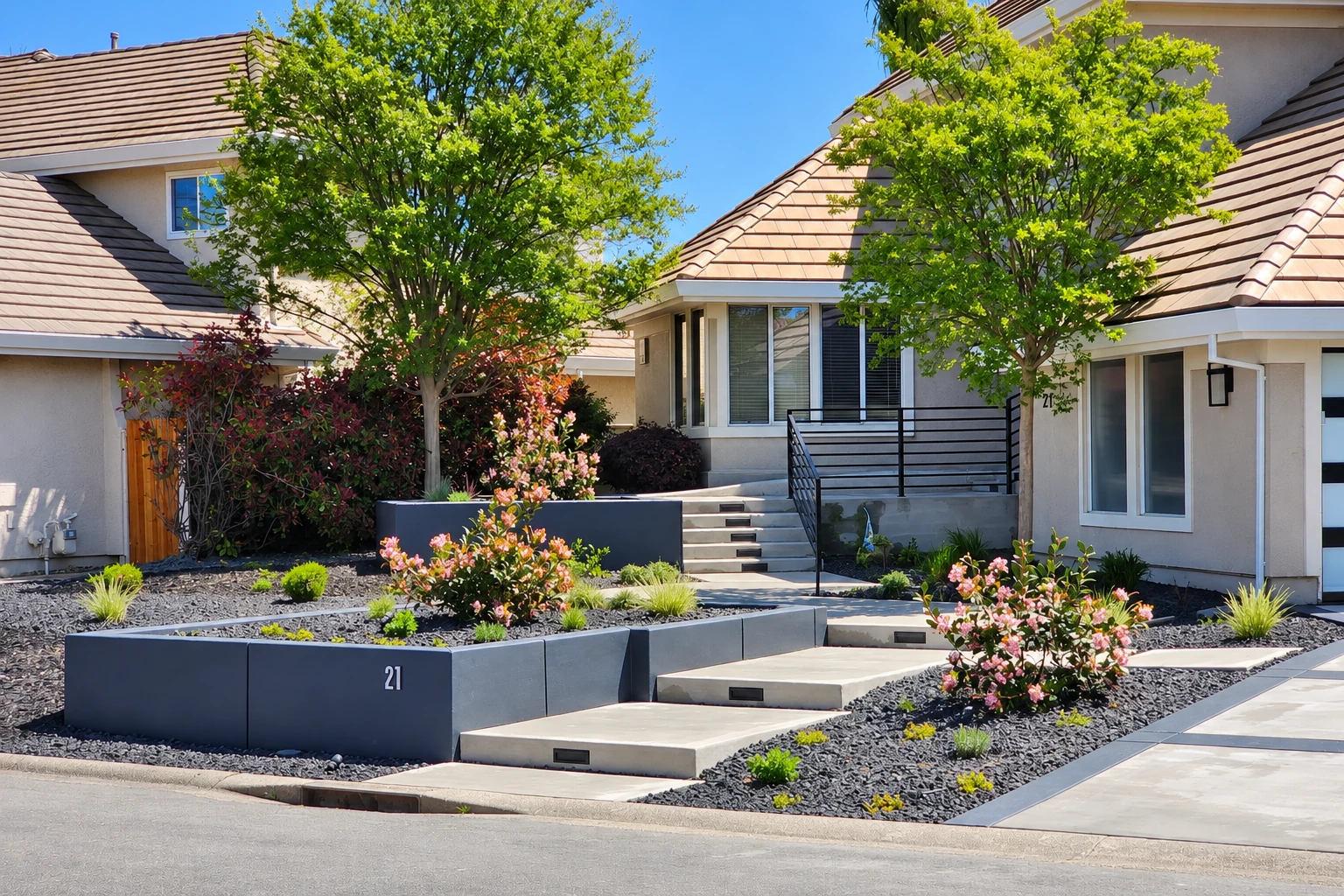
Westfield is a short drive from our home base in West Springfield, and our crew works here the same way it does in Southwick and over in Ludlow. The houses run from older homes near downtown, where driveways and walks have been patched more than once, to newer places farther out toward the Hampton Ponds area. Homeowners call us for driveways, patios, walks and steps. Builders and property owners call for footings, foundations and floors.
A lot of what we tear out here failed underneath before it failed on top. A slab poured on raked dirt sinks with that dirt, and water that runs toward the house finds the low corner, so on most Westfield jobs the dig-out and the base decide how the new concrete holds up.
Permits through Westfield's Building Department
The city's Building Department issues permits for building, altering, repairing or removing a structure, and it reviews plans for code and zoning. Its list doesn't spell out flatwork like driveways, patios and walks, so before we start I check with the department on your job, and when it needs a permit we handle the application for you. Low concrete retaining walls are the clearest case, because the city exempts walls up to 4 feet tall, measured from the bottom of the footing to the top of the wall. Work that needed a permit and didn't get one draws a $500.00 fine on a house, on top of the permit fee.
Why we dig out before we pour
The subgrade, which is the dirt your slab sits on, and the gravel base over it carry the weight. The concrete only spreads it out. That's why we dig out the soft material and pack the base in layers instead of raking it level, because a slab on loose fill settles the way a table leg sinks into a lawn. Before we set forms, I look at where your water runs so the finished slab sheds it away from the house. If the budget needs trimming, I'd rather you give up a fancy finish than the base, since the base is the part you'll never get another look at.
What moves the price and the schedule
The price mostly follows the size and thickness of the slab, how much old concrete we break out and haul away, how much digging the base needs, and how easily a truck can reach the spot. A plain broom finish, the light texture that gives shoes and tires some grip, costs less than stamping or color. The schedule turns on rain on pour day and on curing, the days the concrete needs to gain strength before you put weight on it. When I come out, I walk the site with you and put the scope of the job in writing, so you know what's in it before you decide.