
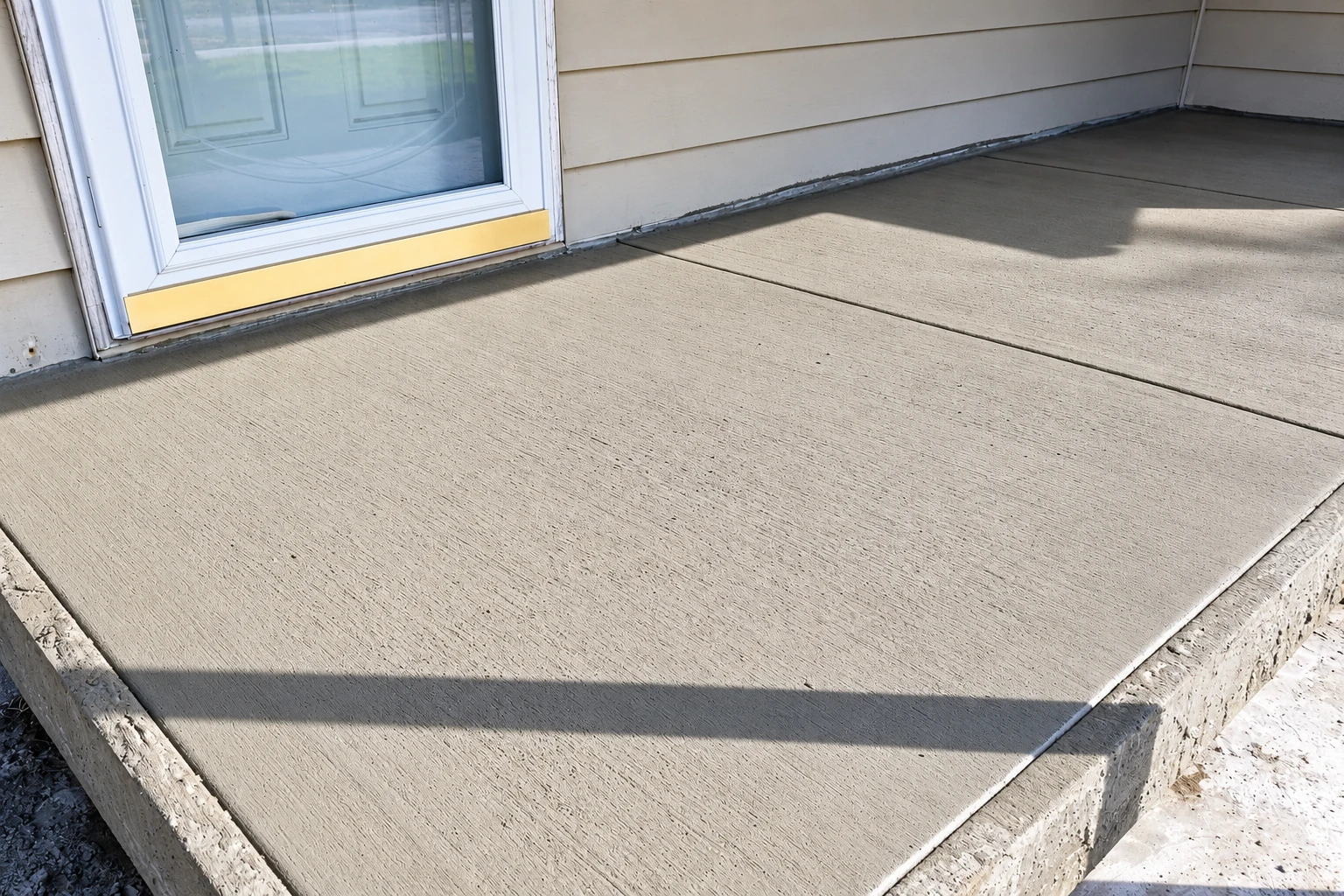
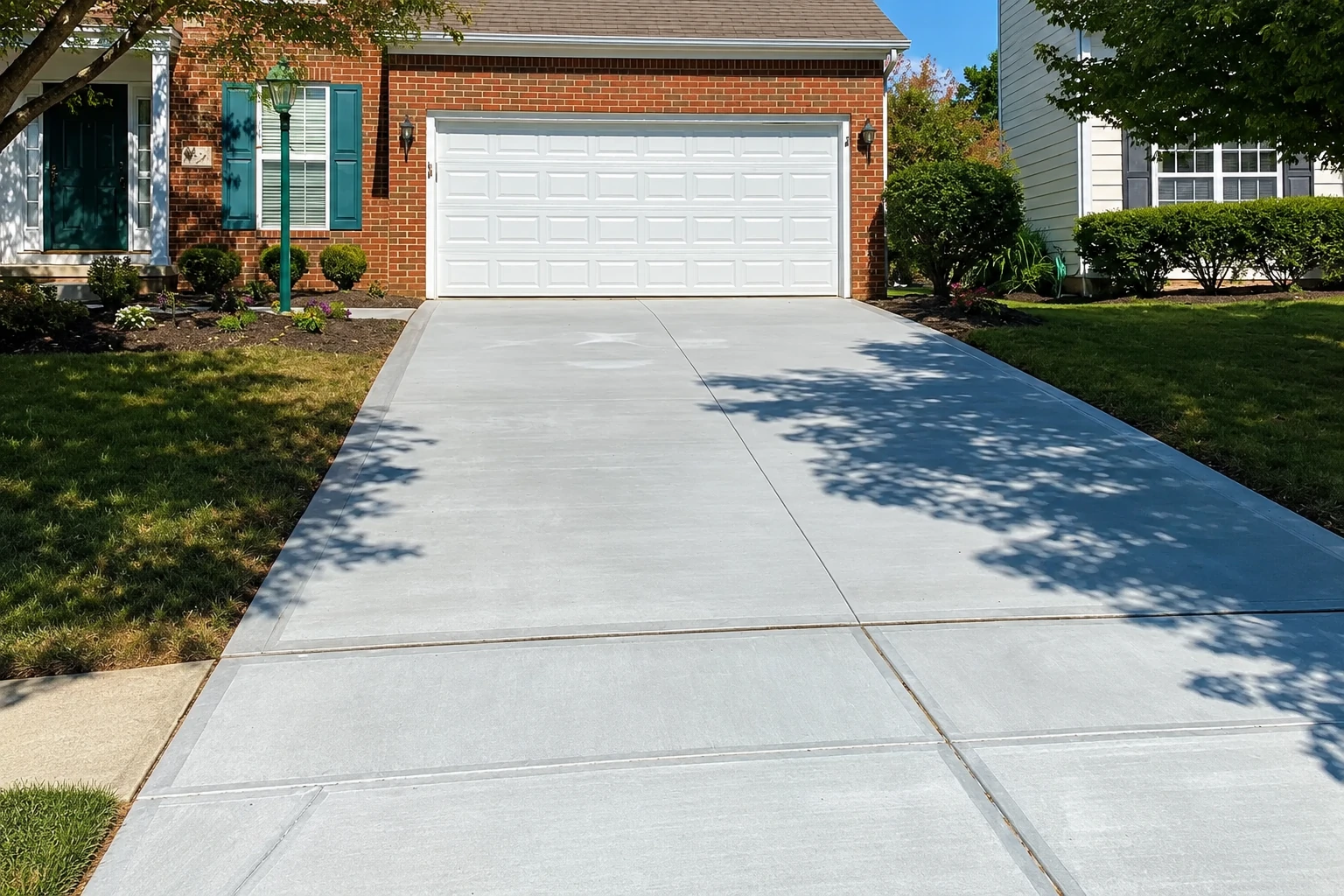
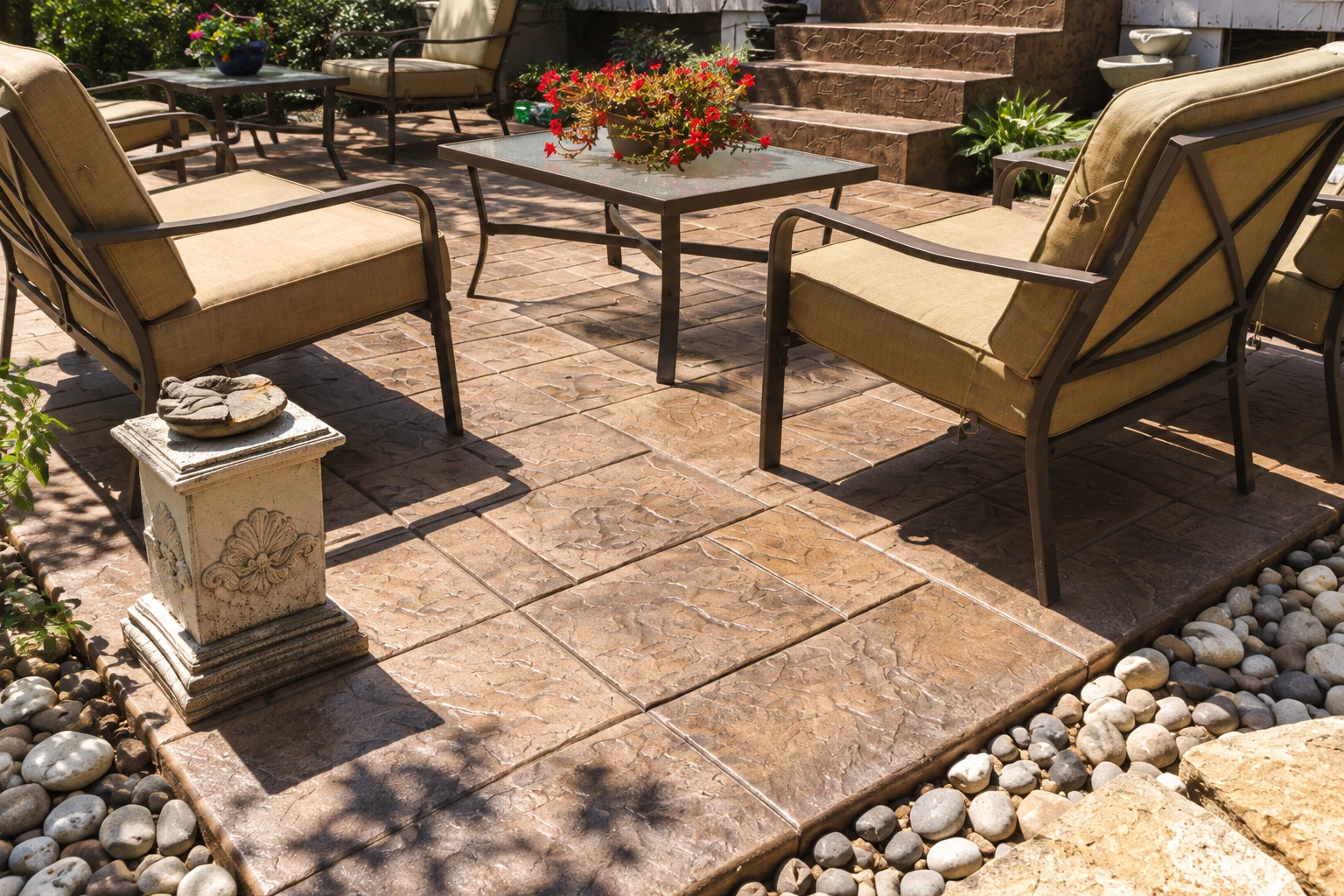
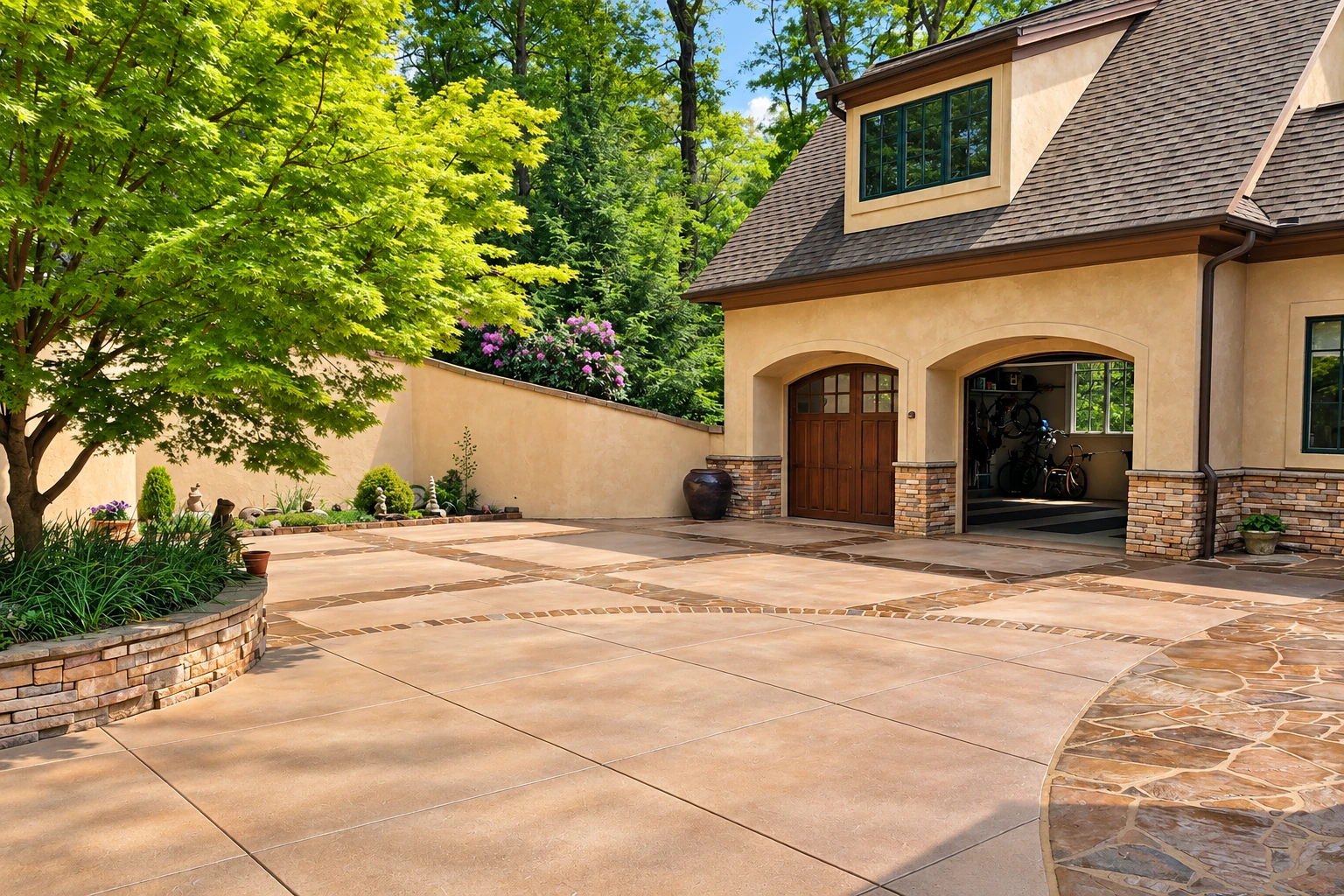

Agawam sits on the Connecticut line, across the Connecticut River from Springfield, and the Westfield River meets the Connecticut at Pynchon Point in the northeast part of town. It's close to home for us, since we're based in West Springfield. Most calls here are for the everyday concrete around a house: a driveway that's settled or split, a patio that holds water, front steps that have started to lean, a walk that's lifted at the seams. Builders and property owners call us for footings, foundations and floors too, and we do the same work in Longmeadow and the other cities around us.
Concrete hides its mistakes for a while. What's under the slab and where the water goes when it runs off decide how it holds up years from now, so on every Agawam lot that's where I start, before we talk about color or texture.
What moves the price and the schedule
Price on a driveway or patio mostly comes down to size and thickness, how much old concrete we break out and haul away, how much digging and packed stone the ground needs, and the finish you pick. A plain broom finish, brushed so shoes and tires grip, costs less than stamped, and tight access for the truck adds labor. The schedule turns on our calendar, any permit the building office asks for, and the weather on pour day. After that comes curing, the wait while the concrete gains strength before you use it. When I walk the site with you, I put the scope in writing so you know what you're paying for.
Why we put the money under the slab
If you have to trim the budget, don't trim the base. We dig the subgrade, the ground the slab sits on, down to firm soil and pack stone in layers, because concrete laid over loose fill settles with the dirt and cracks. Nobody sees that work after the pour, which is why it's the first thing a low bid skips. I'd rather give you a plain finish over a solid base than a fancy one over a soft one. We also cut control joints, shallow grooves that give the slab a straight place to crack instead of wherever it wants, and add rebar, the steel that holds the pieces together, where the job calls for it.
Getting water away from your house
A slab that pitches toward the house sends rain at your foundation, and a patio set dead flat holds puddles. Before we set any forms, I look at where the water runs now and where it should go, then we pitch the slab so it drains toward the yard or the street. Walks and steps get the same look, since they often lead water right back to the door. If yours have heaved or tipped, a new concrete sidewalk with the right pitch takes care of the trip hazard and the puddle at the same time.